You don’t need to be trying to get pregnant, or even sure you want to, to benefit from a fertility consultation.
Credit: Getty / Drazen Zigic
Over the past decade, egg freezing cycles have nearly quadrupled, with tens of thousands of cycles performed every year. More women are tracking, testing, and intentionally planning their reproductive futures. And for good reason: nearly one in six women will experience infertility in their lifetime, and today roughly one in every 37 babies is born using in vitro fertilization (IVF) or related technologies. More people are also sharing their fertility experiences openly—some before they even know how the story ends.
Eboni K. Williams is one of them. The attorney, TV personality, and author began her fertility journey at 34, when she decided to freeze her eggs before she even knew for sure that she wanted to be a mother. At 39, Williams used those eggs to create embryos using donor sperm to become a single mother. Her daughter, Liberty, is now two.
“A lot of people think you need to have certainty around wanting a family in order to freeze your eggs,” says Williams. “But at the time I simply wanted to invest in giving myself the option.”
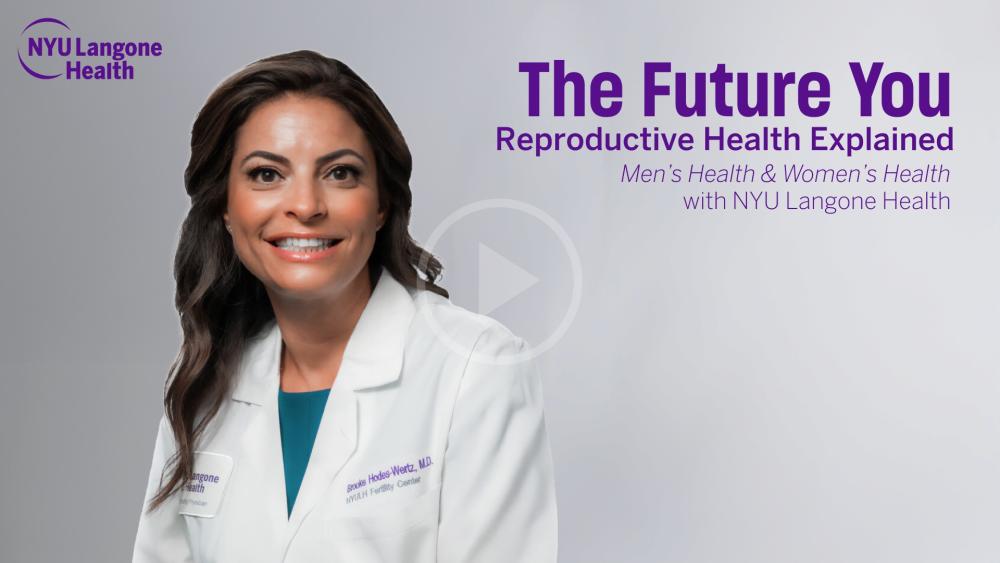
Eboni K. Williams, Dr. Brooke Wertz, and Men's Health and Women's Health editorial director Richard Dorment discuss fertility, reproductive choice, and what it really means to plan for the future.
Williams’s story, and the science behind it, offers a road map for the millions of women navigating fertility questions in their 30s and 40s.
Why Getting Pregnant Isn’t Always Straightforward
In health class, we’re taught that pregnancy is something to prevent, not plan. In reality, conceiving when we’re ready for a family can be complicated and can leave women in their 30s and 40s wondering “Why am I not getting pregnant?”
That’s why experts recommend planning for pregnancy before you’re even ready for it. “Ideally, I would love for women to start thinking about fertility in their 20s—not out of fear or stress, but to understand their options,” says Brooke H. Wertz, MD, a reproductive endocrinologist at NYU Langone Health.
Many fertility challenges don’t have obvious symptoms, which is one reason problems conceiving can catch women off guard. Conditions like polycystic ovary syndrome (PCOS), fibroids, and endometriosis can affect fertility with subtle symptoms. “The menstrual cycle is actually very telling,” Dr. Wertz says. “A lot of times we just ignore it. But being in tune with whether you’re cycling each month or whether it’s painful or heavy can give you clues.”
Williams points to a disparity in fertility that deserves more attention: Black women experience higher rates of fibroids, which can both affect fertility and complicate IVF. “I have friends who froze eggs and want to transfer embryos, but the fibroid issue is persistent,” she says. “It’s something to be aware of and monitor for.”
The takeaway from Dr. Wertz? “If something concerns you about your fertility and you want to know if it’s normal, reach out to a specialist.”
How Fertility Changes with Age
Beyond specific medical problems, age is the single most significant factor affecting fertility: specifically, the age of a woman’s eggs. The quality of those eggs declines over time, with decline accelerating in a woman’s mid-30s and beyond.
“Unfortunately, the one thing we cannot change is the age and quality of a woman’s eggs, which directly affect their potential to create a healthy pregnancy and baby,” says Dr. Wertz.
Though it’s widely believed that age 35 is a kind of fertility “cliff,” after which fertility plummets, Dr. Wertz pushes back on all-or-nothing rules. “The decline in egg quality is usually much more gradual,” she says. What is true is that the sooner a woman decides to freeze her eggs, the more eggs she’s likely to retrieve, with better quality. “When we first rolled out egg freezing, our patients’ average age was 38,” Dr. Wertz says. “Over the past 10 years that average has gone down to about 32 and we’re now seeing patients as soon as their late 20s.”
For women in their 40s who have not frozen eggs, the options may shift. Donor eggs may be a more realistic path to pregnancy for some, but it is still possible to deliver a healthy baby using fertility treatments.
When to See a Fertility Specialist
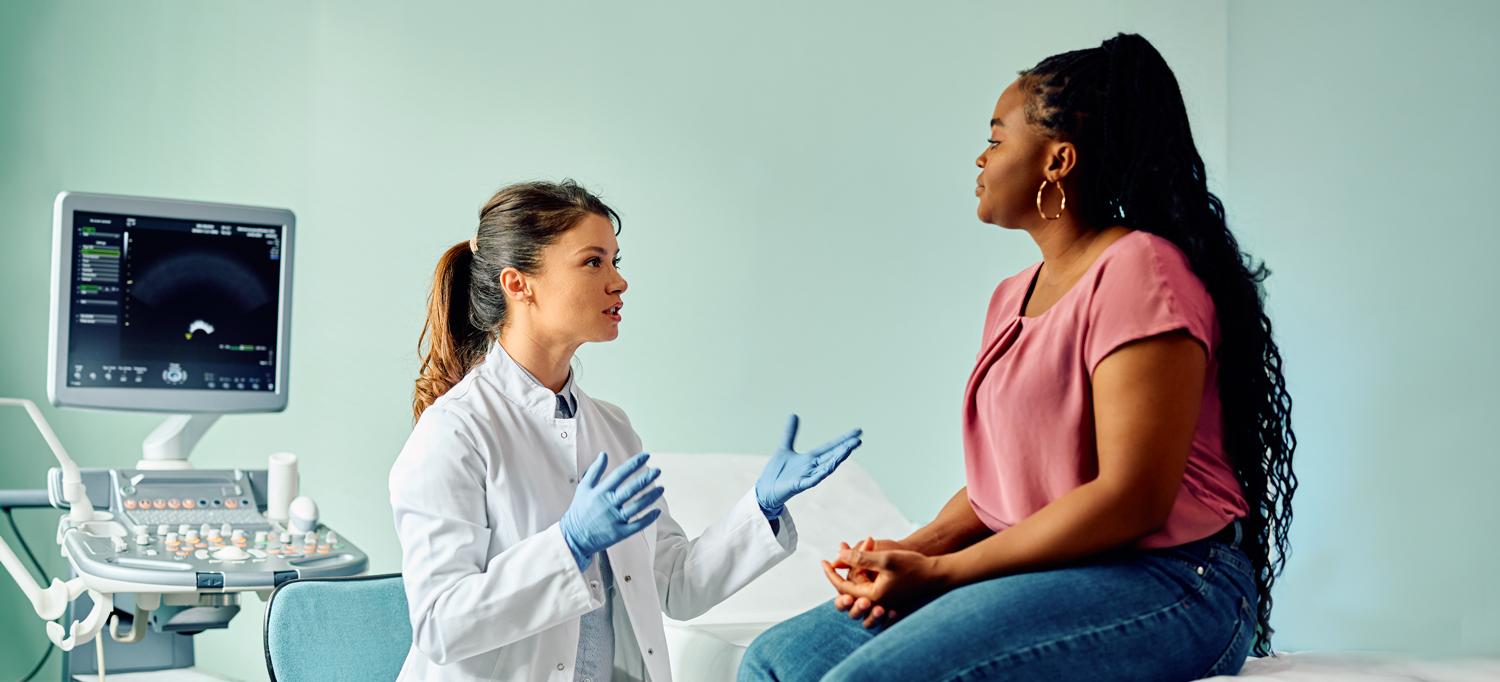
You don’t need to be trying to get pregnant, or even sure you want to, to benefit from a fertility consultation. Dr. Wertz sees patients across the full spectrum: those hoping to conceive soon, those preserving options for the future, and others just curious about where their fertility stands.
Here are some signs it might be worth contacting a fertility specialist, known as a reproductive endocrinologist:
• You’re in your mid-30s or older and haven’t yet explored your fertility baseline.
• You have irregular, very heavy, or painful periods.
• You are 35 or older and have been trying to conceive for six months, or you’re under 35 and have been trying for 12 months.
• You have a known condition, such as PCOS, fibroids, or endometriosis, that can affect fertility.
• You’re considering freezing your eggs and want to understand your options.
“When I began practicing, I mostly saw patients who wanted a baby yesterday,” Dr. Wertz says. “Now I’m also seeing women who want simply want to prepare for the future and educate themselves on their options,” Dr. Wertz says.
What Happens at a Fertility Appointment
For many women, the idea of seeing a fertility specialist feels like a big step. But the first appointment is mainly informational and often reassuring.
A standard fertility workup typically includes blood tests to assess hormone levels (including anti-Müllerian hormone, or AMH, a marker of the egg supply a woman has in her ovaries), an ultrasound to evaluate the ovaries and uterus, and a conversation about health history, cycle, and fertility goals.
“You want to find a provider with whom you feel comfortable having these conversations,” Dr. Wertz says. “And experience is huge. Ask about their lab, their outcomes, and what you can realistically expect.” A clinic that cannot provide data about its outcomes, she adds, likely has not been providing fertility services long enough to report success rates.
Fertility Treatment Options, Explained
After your first consultation, fertility specialists can offer a range of options to achieve conception or preserve fertility. The right path depends on your situation.
With IVF, eggs are fertilized with sperm in a lab to create embryos, which can be tested for chromosomal abnormality before they are transferred to the uterus. Intrauterine insemination (IUI) is a less intensive option in which a concentrated sperm sample is placed directly into the uterus. It is often timed with medications to stimulate ovulation.
Egg freezing involves stimulating the ovaries to produce multiple eggs, retrieving them in a brief outpatient procedure, and freezing them for future use. It’s ideal for women who want to preserve their fertility options without committing to a specific plan. A key technological advance called vitrification, a rapid flash-freeze process, has dramatically improved egg survival rates and helped make egg freezing more viable.
Donor eggs are an option for women whose own egg quality or quantity makes pregnancy unlikely—particularly those in their 40s or with diminished ovarian reserve. And gestational surrogacy involves the creation of embryos from the egg and sperm of intended parents or donors, which are then transferred to a gestational carrier’s uterus.
For Williams, the journey involved frozen eggs fertilized with donor sperm. Out of 10 eggs retrieved, two became embryos after fertilization, but only one was chromosomally normal. Her advice? “Don’t assume what your ultimate outcome will be based on limited information,” she says. “I was so confident at the beginning that I was going to get seven or eight embryos, but it came down to one.”
How to Support Your Fertility
Women are bombarded with messaging about optimizing fertility through diet, supplements, and lifestyle changes. It is true that general wellness habits—managing chronic conditions like diabetes or thyroid disease, maintaining a healthy weight, avoiding smoking—do support reproductive health. Dr. Wertz offers a more measured take: These things matter, but they’re not the main predictor of success.
“There is no magic bullet supplement that is going to dramatically change your egg quality,” she says. “We don’t want patients delaying treatment when time is really the biggest factor.” One of the most powerful things any woman can do is get informed, and take action, early.
Williams echoes this. “Girls are born with all the eggs they’ll ever have,” she says. “If I’d realized that, I may have acted even sooner.”
Emotional health matters too. IVF and fertility treatment involve significant uncertainty, which can take a toll. “It’s a process of getting to a place of accepting that you don’t really have control,” Dr. Wertz says. “That’s really hard.”
Williams agrees. “I had to rely on faith, on community, on people who had gone through it before me,” she says. “Making peace with what you can’t control is part of the journey, and it’s helped me enjoy motherhood even more.”
Learn how the reproductive endocrinologists at NYU Langone’s Fertility Center can help you optimize your fertility and preserve your odds of conceiving in the future.