Below are some of the honors recently given to leaders at NYU Langone:
Dafna Bar-Sagi, PhD, Wins Worth’s Groundbreaking Women Honor
Worth Media Group has named Dafna Bar-Sagi, PhD, executive vice president and vice dean for science, chief scientific officer; and Saul J. Farber Professor of Biochemistry and Molecular Pharmacology, to its 2026 Groundbreaking Women list, which honors women shaping business, science, medicine, and innovation.
A leading cancer biologist, Dr. Bar-Sagi has spent four decades advancing understanding of RAS oncogenes and the signaling pathways that drive tumor growth, with particularly influential work in pancreatic cancer. Her discoveries have helped define new therapeutic strategies, yielded six US patents, and in December 2025 earned her election to the National Academy of Inventors, the highest honor for academic inventors. She is also a member of the National Academy of Sciences and the American Academy of Arts and Sciences.
Clarel Antoine, MD, Receives Maternal Health Visionary Award
Clarel Antoine, MD, clinical professor in the Department of Obstetrics and Gynecology, received the Maternal Health Visionary Award from the Health & Welfare Council of Long Island in recognition of his contributions to advancing maternal health and improving birth outcomes.
Dr. Antoine’s research on cesarean-associated risks and his development of the endometrium-free closure technique have helped advance efforts to prevent placenta accreta and other serious pregnancy complications. He is also co-founder and chair of Rx Compassion and serves on the New York State Department of Health’s Maternal Mortality Review Board, where he advocates for safer and more-equitable maternal healthcare.
Aravinda Chakravarti, PhD, Receives ASHG Leadership Award
Aravinda Chakravarti, PhD, director of NYU Langone Health’s Center for Human Genetics and Genomics, has been awarded the 2026 Leadership Award by the American Society of Human Genetics (ASHG). The honor recognizes his leadership in advancing human genetics and genomics and his long-standing service to the ASHG mission and global scientific community. Dr. Chakravarti, who is also the Muriel G. and George W. Singer Professor of Neuroscience and Physiology at NYU Grossman School of Medicine and a professor at the school’s Institute for Systems Genetics, will be formally recognized at the ASHG 2026 Annual Meeting, to be held October 20 to 24 in Montreal.
Dr. Chakravarti has made key contributions to population and statistical genetics and the study of human disease. His work has helped identify the genetic mutation responsible for cystic fibrosis, advanced understanding of Hirschsprung’s disease as a model for complex disorders, and demonstrated the role of noncoding variation in human disease. As a former ASHG president, a founding editor of genomics journals, and a leader in international initiatives, including the Human Genome Project, HapMap, and the 1000 Genomes Project, he has helped build essential methods and collaborations.
Michael E. Pacold, MD, PhD, Wins Paul-Gallin Trailblazer Prize for Physician-Scientists
The Foundation for the National Institutes of Health (FNIH) announced that Michael E. Pacold, MD, PhD, associate professor in the Department of Radiation Oncology, has been selected to receive the 2026 Paul-Gallin Trailblazer Prize for Physician-Scientists. As part of the honor, Dr. Pacold will be recognized at the annual FNIH Celebration of Science awards ceremony on October 28, 2026, in Washington, DC. The prize is given annually to one early- or midcareer physician-scientist in the US whose research has the potential to transform patient care. It includes a $100,000 honorarium.
Dr. Pacold is a radiation oncologist whose laboratory uses chemical biology to study cancer metabolism—the processes cancer cells rely on to obtain energy, grow, and survive.
As featured in a Behind the Breakthrough video, his research uncovered a previously unknown pathway involved in producing coenzyme Q10, a molecule cells need to generate energy. The discovery began with a question about cancer metabolism and ultimately pointed to a potential treatment for children with rare, severe mitochondrial disorders.
David B. Beck, MD, PhD, Receives Henry Kunkel Early Career Investigator Award
David B. Beck, MD, PhD, assistant professor in the Department of Medicine and the Department of Biochemistry and Molecular Pharmacology, has received the 2026 Henry Kunkel Early Career Investigator Award from the American College of Rheumatology (ACR). Dr. Beck will be recognized at the ACR’s annual conference, taking place November 6 to 11, 2026, in Orlando, Florida.
The Henry Kunkel Early Career Investigator Award recognizes an early-career physician-scientist who has made outstanding contributions to basic, translational, or clinical research in rheumatology. It recognizes a single emerging leader whose independent research is already shaping the field. Dr. Beck’s work focuses on identifying previously unrecognized genetic mutations that cause severe inflammation and using those discoveries to improve diagnosis and guide treatment. He is particularly known for research on VEXAS syndrome, a recently identified inflammatory disorder that can cause recurrent fevers, cartilage inflammation, skin disease, lung abnormalities, and bone marrow failure.
Josef Coresh, MD, PhD, and Team Win ARIC Cares Grant
Josef Coresh, MD, PhD, founding director of the Optimal Aging Institute; Shoshana H. Ballew, PhD, associate professor in the Departments of Medicine and Population Health; and Jennifer M. Reckrey, MD, professor in the Department of Medicine, recently won $15.23 million to conduct the ARIC Cares Study: Caregiving Networks and Their Consequences Among the Oldest Old. The grant, which is from the National Institute on Aging, addresses the coming crisis, as unprecedented numbers of Americans will reach advanced ages in coming years. The “oldest old” (ages 85 and above) are at high risk for diseases, with escalating care complexity and fragmented services use.
There is an urgent need for long-term data about the nature and consequences of caregiving for the oldest old. ARIC Cares is a caregiving study embedded in the Atherosclerosis Risk in Communities (ARIC) Study, a multisite cohort of more than 2,600 individuals ages 82 to 102 with ongoing semiannual follow-ups for more than 35 years. The research team will seek to characterize older adults’ care ecosystems and find novel insights into the consequences of caregiving for this growing population.
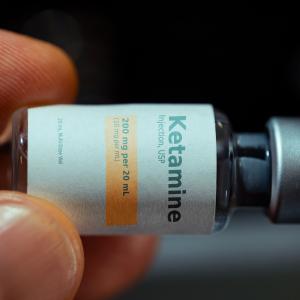
NYU Langone Receives $19.67 in Funding to Lead New Trial of Ketamine for Pain Relief After Orthopedic Surgery
Jing Wang, MD, PhD, the Valentino D.B. Mazzia, MD, JD, Professor of Anesthesiology in the Department of Anesthesiology, Perioperative Care, and Pain Medicine; Philipp Leucht, MD, PhD, the Jyoti Menon Associate Professor of Orthopedic Surgery in the Department of Orthopedic Surgery; and Andrea B. Troxel, ScD, director of the Division of Biostatistics in the Department of Population Health, received $19.67 million in funding from the federal Patient-Centered Outcomes Research Institute (PCORI). The award will fund a clinical trial that will examine whether low-dose ketamine can improve pain control after surgery for serious orthopedic injuries.
For many patients, the pain from an orthopedic injury lingers for months after repair surgery, complicating recovery, disrupting sleep and mood, and sometimes extending the need for pain medication. Long-term pain after orthopedic trauma surgery can affect recovery, mood, and risk for opioid use. The new clinical trial is designed to answer real-world questions, with the potential to change how pain is managed after orthopedic trauma. The multisite study—Ketamine for Pain After Orthopedic Surgery for Trauma (K-POST)—is expected to enroll 1,800 patients who are having surgery to repair broken bones.
Transplant Institute Awarded for Program to Promote Living Kidney Donation
The NYU Langone Transplant Institute was awarded $375,000 through the 2026 KidneyX EMPOWER: Living Link Prize Challenge, a partnership between the US Department of Health and Human Services and the American Society of Nephrology to expand living kidney donation.
The winning program, CADENCE (Education Champions for Active Donor Engagement through Navigation and Community), integrates evidence-based, donor-focused strategies into a scalable model of real-time engagement, navigation, community outreach, and postdonation support.
CADENCE’s goal is to better support people considering living kidney donation, remove barriers along the way, and strengthen engagement with donors and communities throughout the donation journey. The program was developed through a collaboration between the Transplant Institute and the Center for Surgical and Transplant Applied Research.