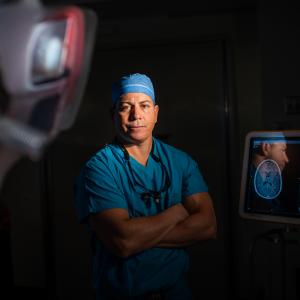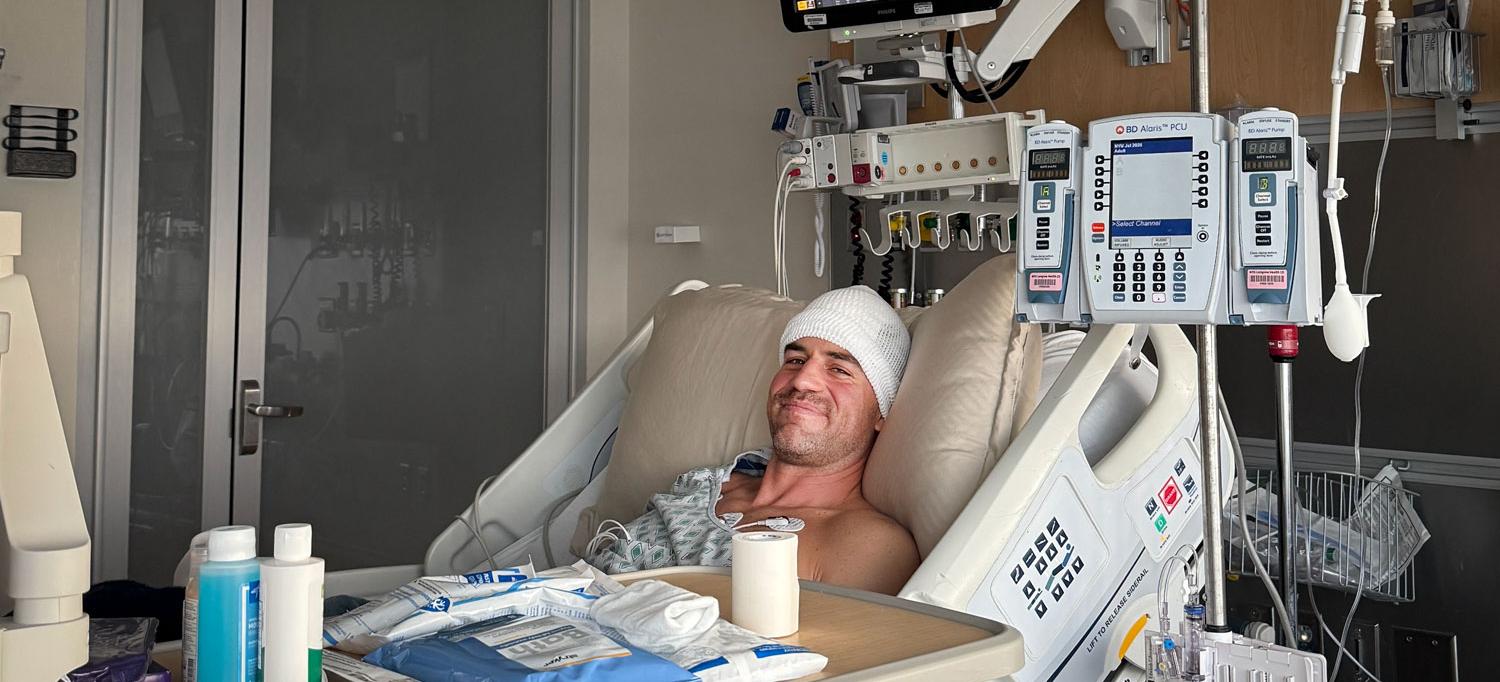
Joe Amabile, 40, underwent brain surgery for an astrocytoma he incidentally discovered from a whole-body MRI scan.
Joe Amabile
Joe Amabile of Bachelor in Paradise had just turned 40 when he underwent an elective whole-body MRI scan. He felt healthy and had no symptoms, so he was surprised when the scan revealed an abnormality on his brain. At NYU Langone Health, a brain MRI confirmed he had a grade 2 IDH-mutant diffuse astrocytoma, a type of slow-growing brain tumor, roughly the size of a blueberry. Two weeks later, on August 5, he underwent neurosurgery to remove the tumor. Now recovering well, Amabile remains under the care of specialists at NYU Langone’s Perlmutter Cancer Center and is looking forward to traveling and training for his third New York City Marathon this fall.
“Something Could Be Wrong”
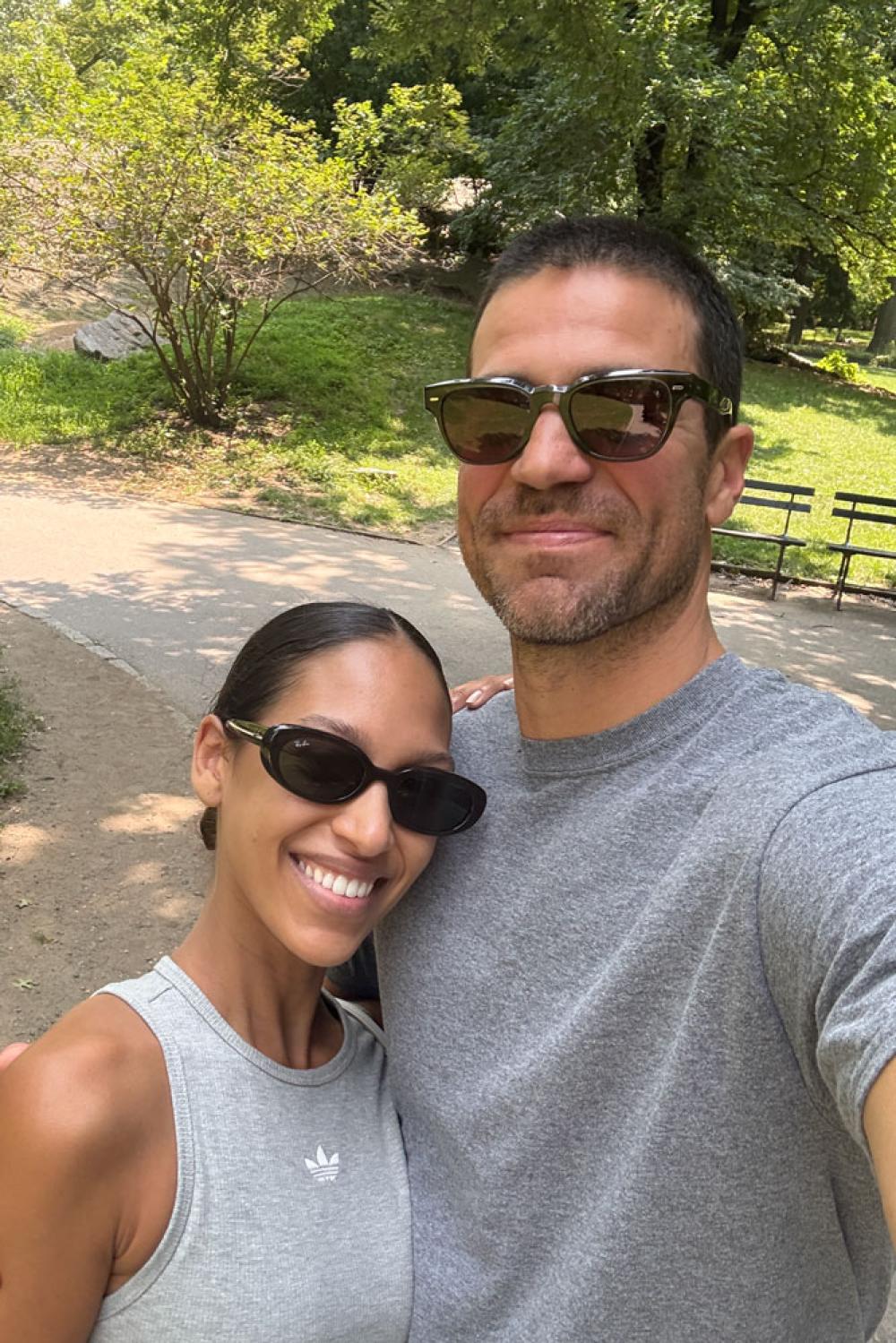
Amabile and his wife, Serena, who met on ‘Bachelor in Paradise.’
Joe Amabile
Amabile and his wife, Serena Pitt, who have lived in New York City for the past four years and host a podcast together, were offered the opportunity to undergo whole-body MRI scans and thought, “Why not?”
Amabile said he wasn’t initially worried. “I figured, I just turned 40. Why wouldn’t I want to know if something wasn’t right? If anything, I thought it would show I had an enlarged prostate or something,” he said.
But two days later, when he received a call about the results, his outlook shifted.
“At that point, I suspected something could be wrong.”
The scan revealed an abnormal area in Amabile’s left frontal lobe, but he needed a dedicated brain MRI to determine what it was. A friend recommended NYU Langone, and Amabile also did his own research to determine the best place to receive care. After getting a second opinion, he made an appointment with John Golfinos, MD, chair of the Department of Neurosurgery at NYU Grossman School of Medicine. For Amabile, finding a team with deep expertise in brain tumors brought a sense of direction and reassurance during an otherwise overwhelming moment.
Confidence in Care
After Amabile underwent a brain MRI, Dr. Golfinos confirmed that he had an abnormality on his left frontal lobe: concerning for a low-grade glioma. This is an area of the brain involved in movement, speech, and other important functions.
“What stands out about Joe’s case is that this tumor was found before it had a chance to cause serious neurological symptoms. He may not have developed symptoms for years,” said Dr. Golfinos. “That gave us an important opportunity to intervene early, remove the tumor safely, and put him in the best-possible position for recovery and long-term management.”
“I went on an Internet deep dive when I first found out about the abnormality. It was pretty bleak, but it helped give me an idea of what treatments may be recommended,” Amabile said. “The good news was that it was low-grade. I felt reassured by Dr. Golfinos that I was going to be fine.”
Amabile had surgery on August 5. His family came to town to help him and his wife during the recovery period, which Amabile said was immensely helpful and a huge relief.
“The week of his surgery was the hardest part for me,” said Pitt. “It was very emotional and overwhelming at times. On surgery day, the nursing staff made all the difference. They allowed me to just focus on being there for Joe and not worry about his medical care. They made us feel taken care of and confident.”
“I felt okay the day of the surgery until I said goodbye to my wife and put the gown on. Then it set in that I was having brain surgery,” Amabile said.
“Surgery offered the best opportunity for Joe to safely remove the tumor while preserving neurological function,” Dr. Golfinos said. “Our goal was not only to treat the tumor, but also to help him return to his life as fully and quickly as possible.”
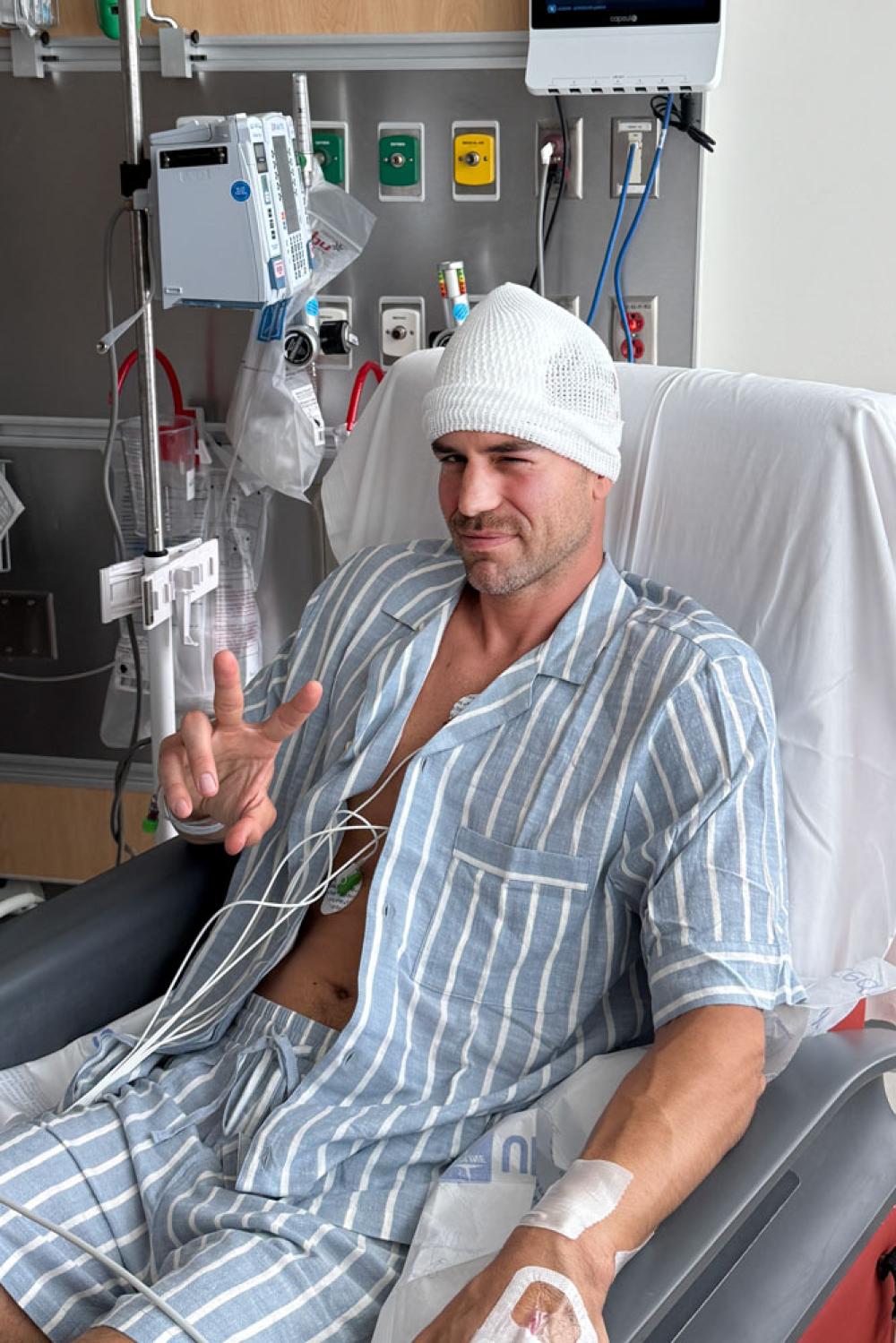
Amabile in the hospital after his surgery.
Joe Amabile
Dr. Golfinos successfully removed the tumor, and in the weeks that followed, Amabile steadily regained his strength, speech, and returned to routines that had grounded him before his diagnosis.
“After two weeks, I felt like my speech was 90 percent back,” he said. “I didn’t have any other symptoms.”
Life After Surgery
Under the care of Alexandra M. Miller, MD, PhD, a neurologist and neuro-oncologist who leads the Neuro-Oncology Program at Perlmutter Cancer Center, Amabile’s condition will be monitored with MRI scans every three months for the next several years. He will also take medication long term to reduce the risk of the tumor growing again. The drug, vorasidenib, was approved by the FDA in 2024. It generally is well tolerated and has minimal side effects for patients.
“With new, effective drugs like vorasidenib now available, we’re entering a new era in the treatment of IDH-mutant tumors,” said Dr. Miller. “The drug targets the cancer cells specifically and helps keep them from growing, giving patients an important new option for long-term management,” she said.
Amabile has since resumed much of his usual routine, including training for the upcoming New York City Marathon in November. Just 15 days after surgery, Amabile was already back to running 3 miles. He has plans to visit family in Chicago and meet his newborn niece.
“It’s been a lot, but I think what’s helped us most is keeping our stress levels down with breathing, meditation, exercise, and staying positive— even when it’s hard to,” Amabile said.
For Amabile, recovery has become not just a return to normal life, but a renewed appreciation for it.
About NYU Langone Health
NYU Langone Health is a fully integrated health system that consistently achieves the best patient outcomes through a rigorous focus on quality that has resulted in some of the lowest mortality rates in the nation. Vizient Inc. has ranked NYU Langone No. 1 out of 122 comprehensive academic medical centers across the nation five years in a row, and it continues to have the most No. 1– and top 10–ranked specialties among medical centers in the United States, according to U.S. News & World Report. NYU Langone offers a comprehensive range of medical services with one high standard of care across seven inpatient locations, its Perlmutter Cancer Center, and more than 400 outpatient locations in the New York City area and Florida. The system also includes two tuition-free medical schools, in Manhattan and on Long Island, and a vast research enterprise.
Media Contact
Casey Nicholl
Phone: 646-983-4920
Casey.Nicholl@NYULangone.org