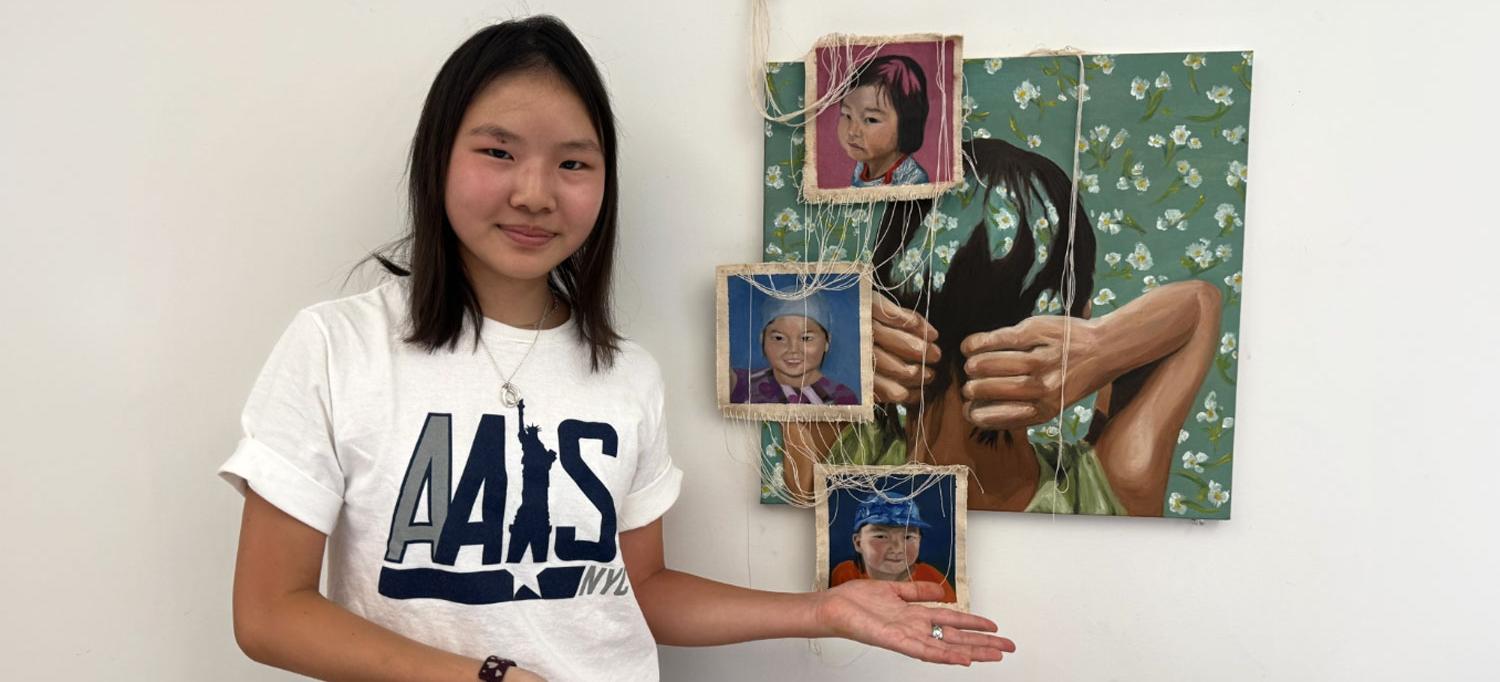
Madeline Lee poses with her artwork
Courtesy Madeline Lee
At 16, Madeline Lee is an artist, designer, author, advocate for alopecia areata, and also a national championship-winning squash player. She was diagnosed with alopecia at age 5 and has since used her creative talents to educate others and challenge the stigma surrounding hair loss.
Alopecia areata is an autoimmune condition in which the immune system mistakenly attacks hair follicles, causing hair to fall out. Today, Lee is a patient at NYU Langone Health, where she has received care from a team of dermatologists that includes Amy K. Bieber, MD, a general dermatologist, Seth Orlow, MD, a pediatric dermatologist and hair loss specialist, and Kristen Lo Sicco, MD, a dermatologist and hair loss specialist.
Nearly 7 million people in the United States and 160 million worldwide have, have had, or will have alopecia areata, according to the National Alopecia Areata Foundation. There is no cure, but the condition can be effectively treated and managed with medication. Lee and her older sister, Alison, co-founded the Alopecia Justice League in 2021, whose mission is to spread awareness of alopecia areata and dismantle society's stigma around baldness.
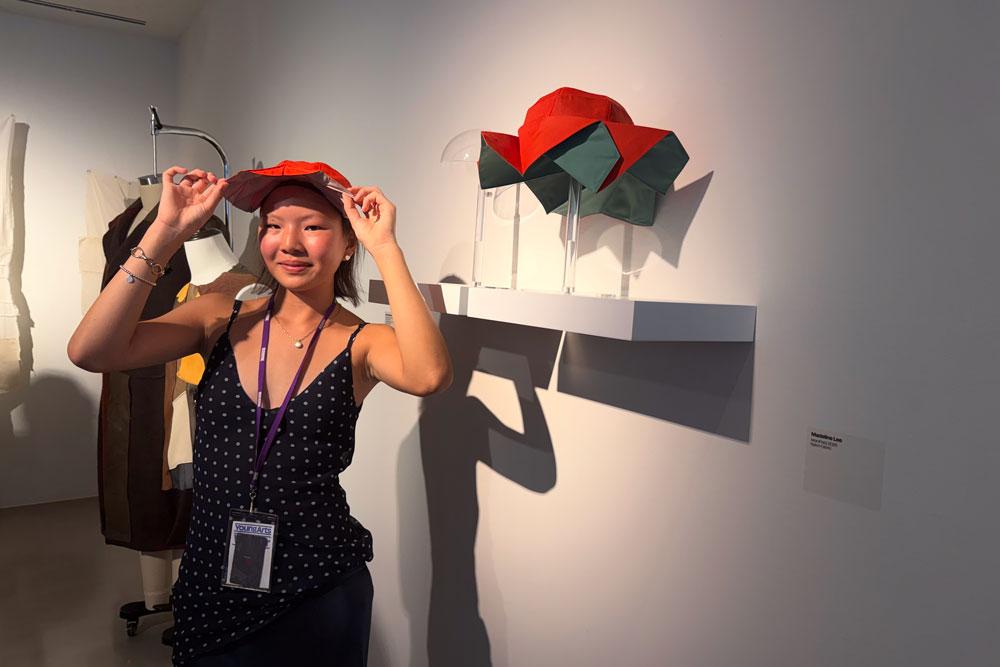
Lee models one of her hats at an art exhibition.
Courtesy Madeline Lee
Learning and Teaching Self-Acceptance
Alopecia areata often begins in childhood, and about 40 percent of people with the condition experience symptoms by age 20. Lee said that growing up with alopecia areata was isolating and difficult at times.
“I remember seeing chunks of my hair fall into the drain and being confused,” Lee said. “It wasn’t until I was older that I started to understand what was happening.”
Lack of education among her classmates and friends affected Lee’s social life at school.
“In first grade, a kid in my class pulled my hat off, and he was stunned,” she recalled.
“A lot of the incidents at the time felt mean and invasive, but as I got older, I learned how to cope. I don’t blame the kids at my school for how they treated me. They didn’t know what alopecia areata was.”
Lee’s work with the Alopecia Justice League has helped her spread awareness and education to children and adults. The organization created a school curriculum to educate children about hair differences, encouraging kindness and empathy while helping children experiencing hair loss feel seen and accepted.
“I’ve noticed people have treated me differently as I’ve gotten older. They want to know about my experience, and they ask questions from a place of caring,” Lee said.
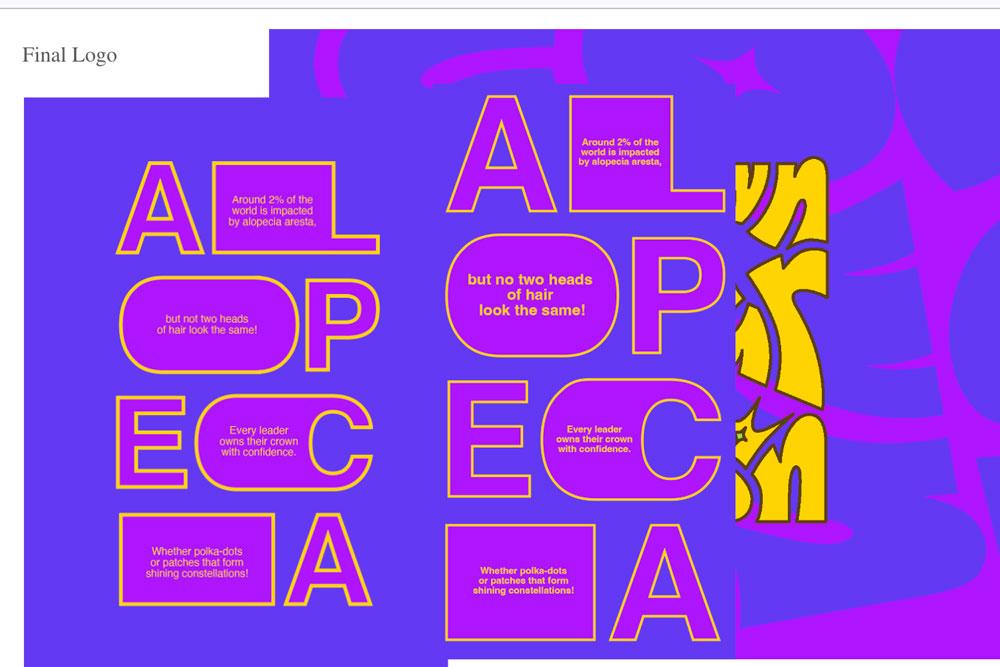
Courtesy Madeline Lee
Dr. Lo Sicco has cared for Lee since she was 11 years old. In addition to caring for patients with hair loss and conducting clinical research, Dr. Lo Sicco is involved in the Alopecia Justice League.
“Building up Madeline’s self-confidence has always been my number-one priority,” Dr. Lo Sicco said. “Her family’s love and support have been instrumental as well.”
A major part of Lee’s journey with alopecia areata was writing the children’s book How Ari Got Her Cape. Drawing inspiration from her own experience growing up with alopecia areata, Lee knew the book would help young readers celebrate each other’s differences.
Advancements in Treatment Give Madeline New Options
Lee’s care at NYU Langone has evolved over the years as new treatments for alopecia areata have become available. Lee experienced full regrowth at the age of 7, but her hair fell out again a year later.
“Growing up, I tried a lot of different treatments and medicines like herbal baths, creams, oral medication, injections, and more. It could be overwhelming,” she said.
Dr. Lo Sicco prescribed Lee different oral medications, with some producing moderate success. She later suggested combining monthly injections of dupilumab with the oral medication ritlecitinib. Lee responded well to this combination of treatments, and she has experienced more hair growth over the last year.
“The landscape of alopecia areata treatment has drastically changed in the last 10 years,” said Dr. Lo Sicco. “We’ve seen great results so far with the current combination of medications Madeline is taking.”
“I’m grateful that new, less-invasive treatments have become available,” Lee said.
Storytelling and Advocacy Through Art
With her active lifestyle and the climate of New York City, where she livess, finding the right headwear was a challenge for Lee.
“It was important to have conversations about what head coverings worked for Madeline in different settings. Bandanas were great for sports. Because patients with alopecia areata often lose their eyebrows and eyelashes, hats can help protect her eyes and face from sweat, dust, or other debris,” said Dr. Lo Sicco.
“I hated wearing wigs, so hats were always very important to me,” she said. Store-bought hats, however, weren’t always functional for Lee.
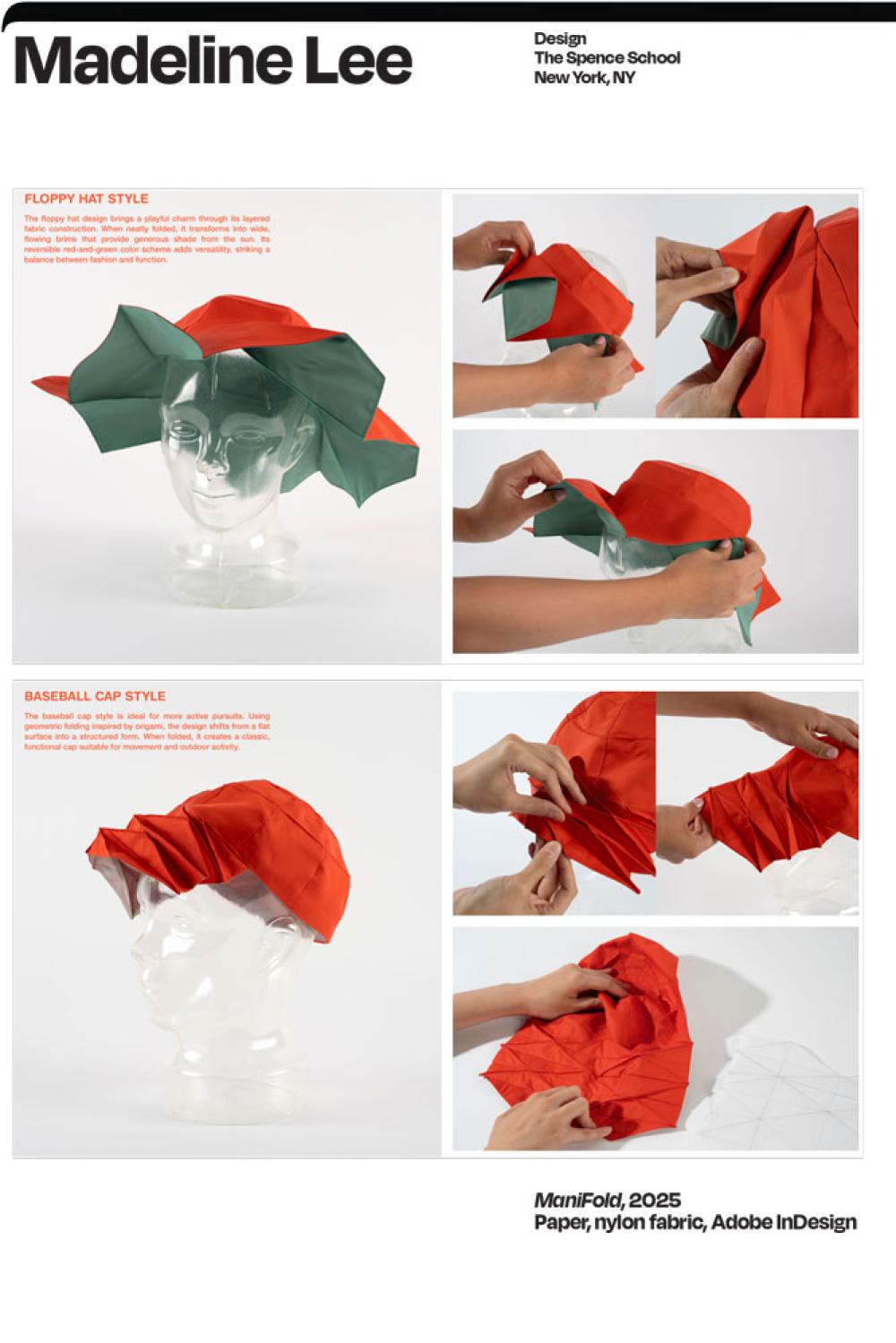
Courtesy Madeline Lee
In 2020, Lee taught herself to sew and started making her own hats in custom patterns, combining fashion and function. Last year, Lee successfully entered her hat designs into an art exhibition in Miami, Florida.
“Everything in my portfolio was inspired by my hair loss journey. I use hats as a storytelling tool,” she said.
Lee credits pop culture and social media for helping increase representation and awareness of alopecia areata.
“I use social media to express myself and my interests—art, food, spam, my book. I follow some influencers with alopecia areata too. It’s nice to see media diversify and include more perspectives.”
Exploring the connection between popular culture and visible skin differences, Dr. Lo Sicco, Daniel R. Mazori, MD, a dermatologist specializing in skin autoimmune disorders at NYU Langone, and colleagues published a paper this year in the International Journal of Dermatology that investigated how dermatologists can use popular culture to better connect with and empower patients.
“You never know what’s going on with people underneath, so it’s nice to see those lessons shown in movies targeting kids and adults,” Lee said.
With a supportive community of friends and family, Lee has found joy and purpose living with alopecia areata, and hopes her story will inspire others to follow their passions and celebrate their differences. Her experience also reflects how advances in alopecia areata research and care are giving patients more options to manage hair loss and live confidently.
Learn more about hair loss and the resources NYU Langone offers patients, including weekly support groups and mental health support.
About NYU Langone Health
NYU Langone Health is a fully integrated health system that consistently achieves the best patient outcomes through a rigorous focus on quality, resulting in some of the lowest mortality rates in the nation. Vizient Inc. has ranked NYU Langone No. 1 out of 118 comprehensive academic medical centers across the nation for four years in a row, and U.S. News & World Report recently ranked four of its clinical specialties No. 1 in the nation. NYU Langone offers a comprehensive range of medical services with one high standard of care across seven inpatient locations, its Perlmutter Cancer Center, and more than 400 outpatient locations in the New York area and Florida. The system also includes two tuition-free medical schools and a vast research enterprise.
Media Contact
Casey Nicholl
Phone: 646-983-4920
Casey.Nicholl@NYULangone.org