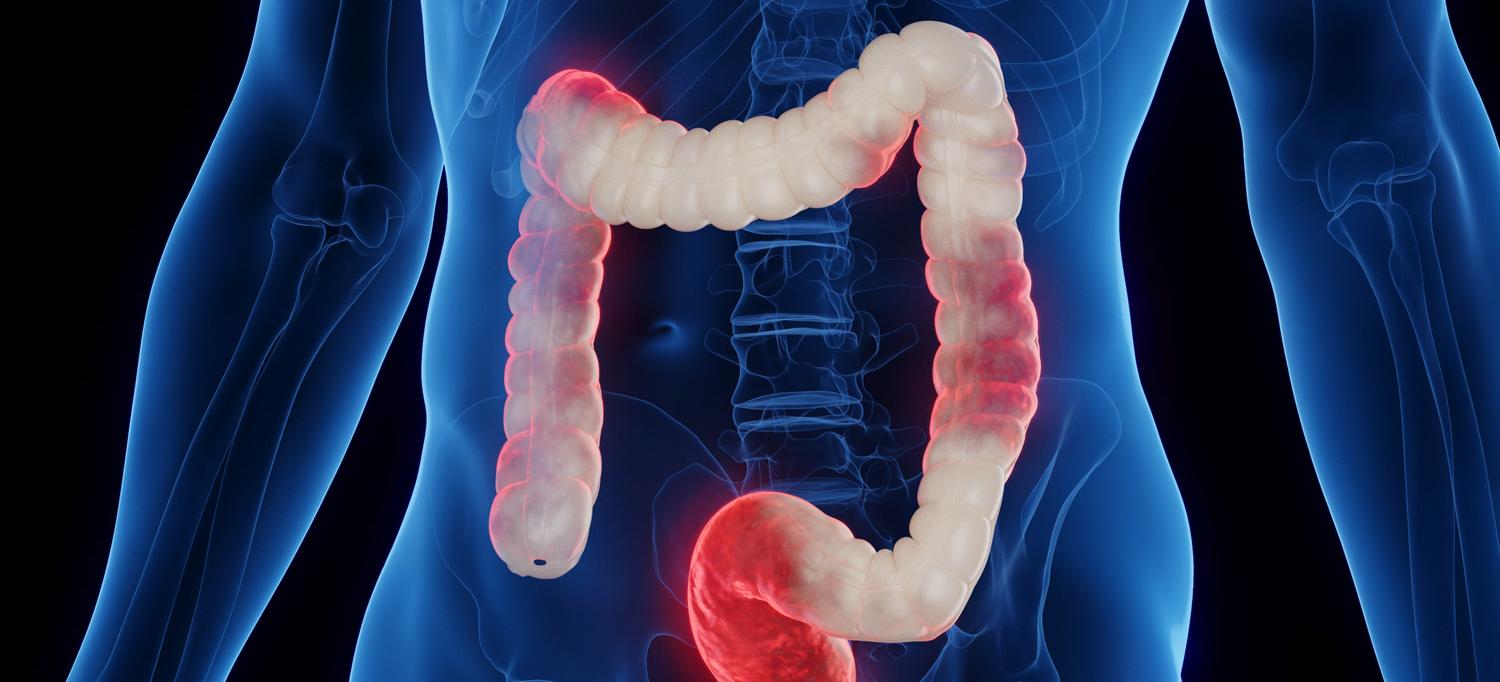
The data can be used to “help doctors and patients make more informed decisions about the frequency of cancer screening and potential interventions,” per the study’s lead author, Dr. Jordan E. Axelrad.
Credit: Getty / SEBASTIAN KAULITZKI/SCIENCE PHOTO LIBRARY
People with inflammatory bowel disease (IBD) and precancerous colorectal lesions are much more likely to develop colorectal cancer, a new study shows.
Led by researchers from NYU Langone Health, the study found that the level of cancer risk depends on the initial grade of the precancerous lesions, known as dysplasia, underscoring the need for regular monitoring. The study authors say the findings provide the most precise risk estimates to date, which could help refine guidelines for how often IBD patients with different levels of risk should be screened for colon cancer.
The investigation found that over a nearly 15-year period, patients with low-grade precancerous colorectal lesions were 3.5 times as likely to develop advanced dysplasia or colorectal cancer than those with no such lesions. For those with the most severe initial finding, high-grade dysplasia, 40 percent developed colorectal cancer. Published in Clinical Gastroenterology and Hepatology, the work clarifies the risk tied to different grades of dysplasia, the term given to abnormal-looking cells that are not yet cancer.
“While we have long known that dysplasia increases cancer risk in IBD, the exact level of danger for each grade has been unclear,” said lead author Jordan Axelrad, MD, MPH, associate professor in the Department of Medicine at NYU Grossman School of Medicine and co-director of NYU Langone’s Inflammatory Bowel Disease Center. “Our work provides robust, long-term data that can help doctors and patients make more informed decisions about the frequency of cancer screening and potential interventions.”
Inflammatory bowel disease is the umbrella term for two chronic conditions, ulcerative colitis and Crohn’s disease, that cause long-term inflammation in the digestive tract. According to the Centers for Disease Control and Prevention, an estimated 3 million adults in the United States are affected by the conditions. For patients living with IBD, these findings underscore the importance of adhering to the colonoscopy schedule recommended by their gastroenterologist, allowing doctors to find and remove precancerous cells early.
Nationwide Study Provides Precise Cancer Risk Data
For the study, the research team analyzed data from a national registry in Sweden. This allowed them to track the health of more than 54,000 people diagnosed with IBD. This nationwide approach provides a more complete picture than studies based at a single hospital, which may have biases related to its specific patient population.
The researchers used pathology reports, which describe tissue samples examined under a microscope, to group patients based on their initial finding of dysplasia. The groups included patients with no dysplasia, indefinite dysplasia, low-grade dysplasia, and high-grade dysplasia. The team then followed each group for a median of nearly 15 years to see who developed more advanced dysplasia or colorectal cancer.
Using statistical models, the team calculated the risk of progressing to advanced precancerous lesions or cancer for each group. The analysis accounted for other known risk factors, including a patient’s sex, age, extent of their IBD, and other related medical conditions. This helped isolate the risk posed by the different grades of dysplasia alone.
“Our next goal is to see if we can build a personalized risk calculator based on these findings,” said Dr. Axelrad. “Such a tool could help clinicians better tailor colonoscopy surveillance plans for each patient, potentially catching dangerous changes earlier while avoiding unnecessary procedures for those at lower risk.”
Adam Faye, MD, assistant professor in the Department of Medicine and director of clinical research at NYU Langone’s IBD Center, also participated in the study, which was conducted in collaboration with researchers at Karolinska Institutet and Örebro University. Funding support came from the Crohn’s and Colitis Foundation, the Judith and Stewart Colton Center for Autoimmunity, National Institutes of Health grants K23DK124570 and K76AG083286, and the American College of Gastroenterology.
About NYU Langone Health
NYU Langone Health is a fully integrated health system that consistently achieves the best patient outcomes through a rigorous focus on quality that has resulted in some of the lowest mortality rates in the nation. Vizient Inc. has ranked NYU Langone No. 1 out of 118 comprehensive academic medical centers across the nation for four years in a row, and U.S. News & World Report recently ranked four of its clinical specialties No. 1 in the nation. NYU Langone offers a comprehensive range of medical services with one high standard of care across seven inpatient locations, its Perlmutter Cancer Center, and more than 320 outpatient locations in the New York area and Florida. The system also includes two tuition-free medical schools, in Manhattan and on Long Island, and a vast research enterprise.
Media Inquiries
Lacy Scarmana
Phone: 646-754-7367
Lacy.Scarmana@NYULangone.org