Practical Advice from an NBA Legend & Sports Medicine Expert
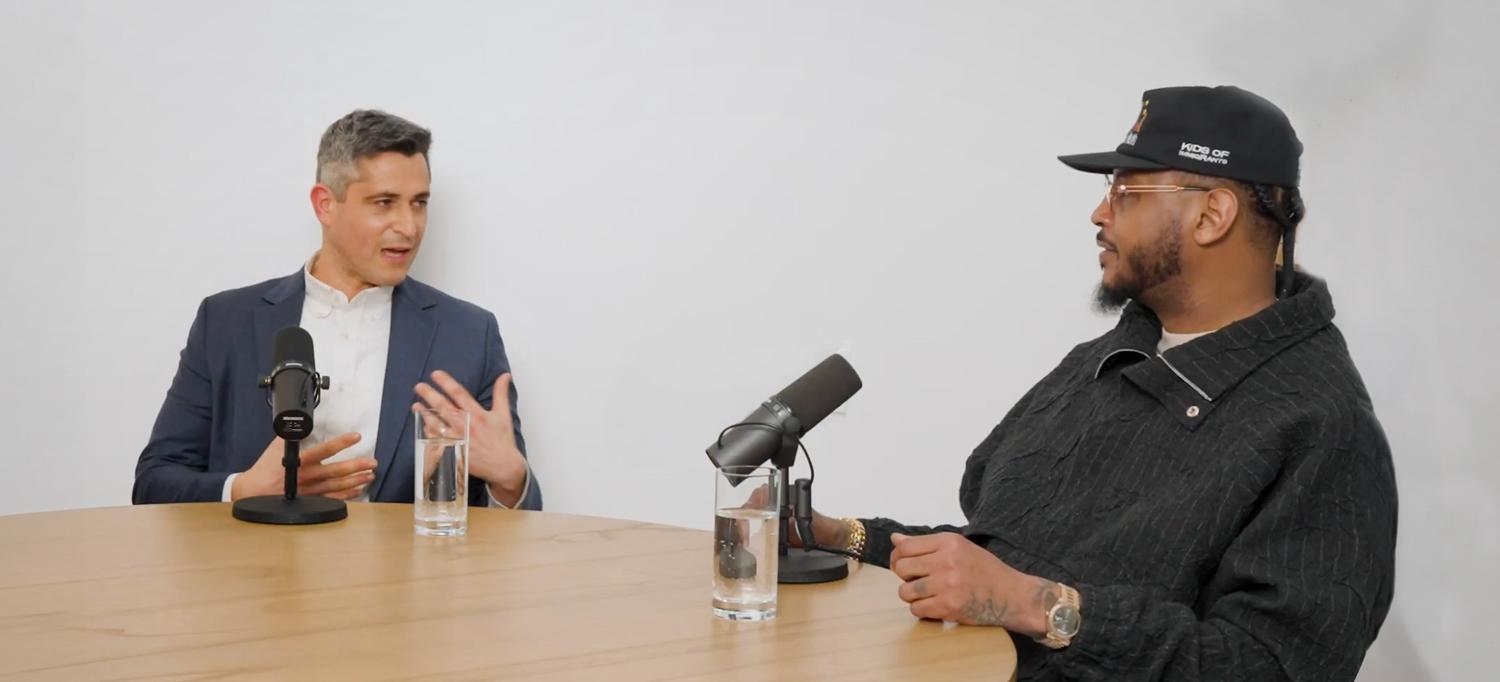
Credit: NYU Langone
When Carmelo Anthony arrived at Syracuse University as a freshman, “recovery” wasn’t part of the conversation for college athletes. But by the time he retired after 19 seasons in the NBA, with two torn shoulders and a broken foot he played through, his approach had transformed completely.
Now he has a rare vantage point: his son, Kiyan, plays for the Syracuse Orange, and the contrast couldn’t be more striking. “This generation is heavily involved in the wellness and recovery side of things—the science and data are right in front of them,” he says. What took Anthony years of trial and error is part of today’s athletes’ mentality from day one.
His main takeaway is simple: Don’t wait for something to go wrong. “Make sure you have a good medical team behind you,” he says, “and that you’re doing everything you can to prevent injuries before they happen.”
Watch Carmelo Anthony, Dr. Omri Ayalon, and editorial director Richard Dorment discuss how recovery and injury prevention have evolved.
Omri B. Ayalon, MD, an orthopedic surgeon at NYU Langone’s Sports Medicine Center, says it applies far beyond the pros. What separates athletes who last from those who don’t is more than talent—it’s how they take care of their bodies before, during, and after competition.
Here’s what that looks like in practice, whether you’re a competitive athlete or trying to stay active as you age.
Make Recovery a Habit, Not an Afterthought
Recovery isn’t something you do only when you’re injured. It’s something you build into your routine from the start—and the earlier you begin, the better. “Building those habits of recovery is a learned skill,” says Dr. Ayalon.
For Anthony, recovery became a focus as his career progressed: biking in the steam room, cold plunges, stretching, and massage. The good news? Easy movement, from a slow bike ride to laps in the pool, is one of the most underutilized recovery methods.
“Low-intensity movement flushes out the body and promotes blood flow, which is especially important for tendons,” explains Dr. Ayalon. “You’re managing inflammation and swelling.”
Do Not Play Through Pain
Athletes are often taught to play through pain, and Anthony learned that lesson the hard way. He broke his foot the summer before his freshman year and played through it without the proper medical care. “That stuck with me throughout my career,” he says. “My ankle was always tight, and I always had to give it special treatment in order to play.”
Dr. Ayalon says this “play through pain” mentality can lead to more injury, especially in younger athletes. “Kids are not just small adults,” he says. “Their bones are still growing and ligaments are still forming. The type of load a young athlete can endure differs from an older one.”
When pain persists—whether you’re a young pitcher with elbow pain or an adult runner with knee discomfort—it’s best to pause. “Reducing activity temporarily and redirecting your training is actually going to pay off long term,” Dr. Ayalon says.
Train for All Types of Motion
Some strength programs focus on predictable, linear movements—bench presses, bicep curls, straight-ahead running. But sports don’t work that way. “Sports are unpredictable,” Dr. Ayalon says. “You could be moving in any direction.”
The bottom line? Incorporate rotational exercises, core work, and mobility-focused movements like yoga and Pilates in your training. “It’s not just sitting on a bench and pumping iron,” Dr. Ayalon says. “It’s about movement and stability from the core out.”
That principle extends to individual joints and tendons, too—particularly those that take a beating in sports. Carmelo’s career-long ankle issues, stemming from that unaddressed broken foot, are a case in point. “We now have entire programs focused on just the ankle or Achilles,” Dr. Ayalon says. “Every area that’s going to see stress needs to be worked out.”
Don’t Overlook the Mental Side of Performance
Burnout is a real, and often overlooked, injury risk. “The mental health component of being a student or professional athlete is enormous,” Anthony says. His advice to any athlete: build rest into your routine as deliberately as training. “Take a day off. Don't do anything that involves your sport,” he adds.
Dr. Ayalon agrees that the mental side of recovery is legitimate sports medicine and should be built into your recovery. Even something as physical as alternating cold and heat—for example, moving from a cold plunge to a steam room—can produce real psychological benefits along with physical ones.
For Anthony, mental health in sports comes down to simple questions: “How do you remain calm amid chaos? How do you find a moment to just sit still and think before you react?”
Use Technology Wisely (But Don’t Rely on It Alone)
Wearables, heart rate variability monitors, motion tracking—many tools are available today. But Dr. Ayalon recommends a measured approach when using them. While the technology for tracking cardiovascular fitness is well-established, using wearables to prevent injury is still an evolving science.
“It has potential,” he says, “but for now, there is no substitute for simply knowing your body.”
Train for Longevity, Not Just Performance
An important shift in modern sports medicine is the focus on the long game—not just peak athletic performance but staying healthy and active for decades to come. “I don’t bench press anymore,” says Anthony. “I want to be able to run in the park with my daughter or play basketball with my son. I train for those things now.”
It’s a mindset that applies whether you’re a professional athlete or just trying to stay active into your 50s and beyond. Dr. Ayalon sees it reflected in how sports medicine itself has evolved. Surgical techniques have become more minimally invasive, with faster recovery, and biologics like platelet-rich plasma (PRP) injections and stem cell therapies are increasingly used to enhance the body’s natural healing process.
The goal isn’t just to keep athletes on the court or field, but to keep all of us moving longer.
Put It into Practice
To get there, the principles are the same whether you’re a pro or a weekend player: train efficiently, recover intentionally, and listen to your body. And when you need guidance, the right medical team makes all the difference.
If you’re dealing with a nagging injury or looking to move better and stay active for the long haul, NYU Langone’s sports medicine team is here to help. Learn how our experts can help you avoid injury, recover faster, and perform better.
Media Inquiries
Marlene Naanes
Phone: 212-404-5016
Marlene.Naanes@NYULangone.org