NYU Grossman Long Island School of Medicine has begun giving medical students an educational version of Epic in the school’s Simulation Center, a move that’s enhancing learning in real time for the students who are soon to be doctors.
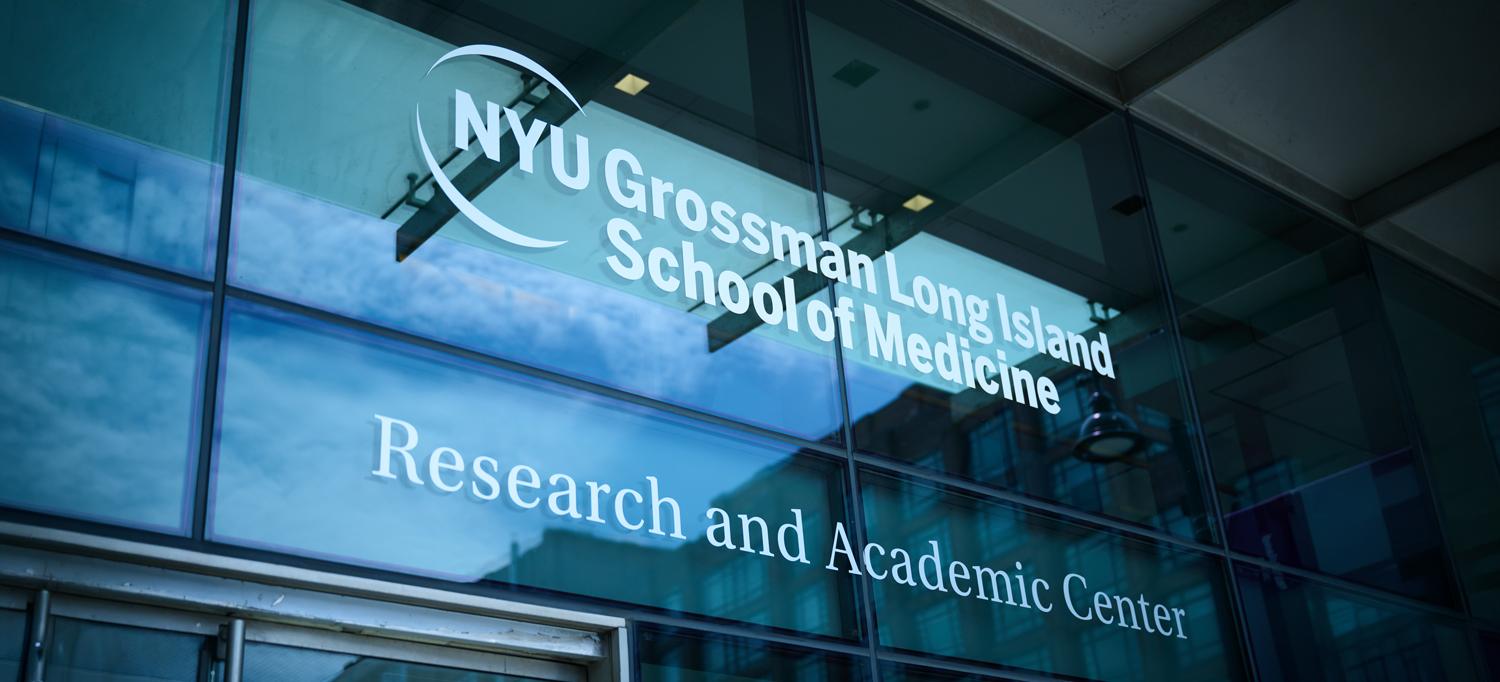
Inside the 5,000-square-foot Simulation Center in the Research and Academic Center on NYU Grossman Long Island School of Medicine’s Mineola campus, true-to-life scenarios are created to test medical students and clinicians on their knowledge and responses to medical cases they’re likely to encounter in the real world. In May 2026, the center added a simulation module for Epic, NYU Langone’s electronic health record system.
“If we can replicate at the Sim Center what students and future doctors will use in real time, it will enhance not only our students’ experience but also their future patients’ experience,” said Sunil George, MD, medical director of the simulation center at NYU Langone Hospital—Long Island and associate professor in the Department of Emergency Medicine at NYU Grossman Long Island School of Medicine.
“One of our objectives for our students is to improve their proficiency in accessing medical records through Epic,” said Dr. George. As students, they are primarily observers of medical records, whereas at the Sim Center, they can practice adding and making notations to patient records—which, while not real records, still behave like real ones on the computer.
Before introducing Epic, medical students and residents practiced with pen and paper and PowerPoint. The center added simulated patients into the system with the help of Paul A. Testa, MD, an emergency medicine physician and chief health informatics officer; Nicholas Genes, MD, PhD, director of emergency medicine informatics in the Ronald O. Perelman Department of Emergency Medicine; and Sean Cavanaugh, associate director of the Simulation Center.
“This can really help them as they transition from student to doctor,” Dr. George said.
Nicole Bryce, MD, a first-year resident in pediatrics, was one of the students who trained in Epic at the Sim Center.
“Now that I’ve transitioned into residency, I’ve realized how much my exposure to Epic has helped me. Becoming familiar with the interface before internship has made note-writing, chart review, and navigating the medical record much more efficient,” said Dr. Bryce.
For example, Dr. Bryce added, “I already know where to find key information, such as laboratory results, growth charts, immunization records, and notes from prior encounters, which allows me to focus more on clinical decision-making rather than learning the mechanics of Epic.”
The first practice scenario was a pediatric patient whose parents had questions about vaccinations. Using Epic, the students could see which vaccines the patient had already received and think critically about how to best counsel parents on the standard of care.
“Seeing a simulated patient mirrors real clinical practice and reinforces habits that are essential for patient care,” Dr. Bryce said. “In pediatrics, for example, reviewing growth curves, immunization status, vital signs, and previous visits becomes second nature.”
Epic simulation has already been in use at the New York Simulation Center for the Health Sciences, a collaborative venture between NYU Langone and the City University of New York, where NYU Grossman School of Medicine students train. The expansion of these state-of-the-art training capabilities to the Long Island Simulation Center is just one way that NYU Grossman Long Island is innovating medical education.