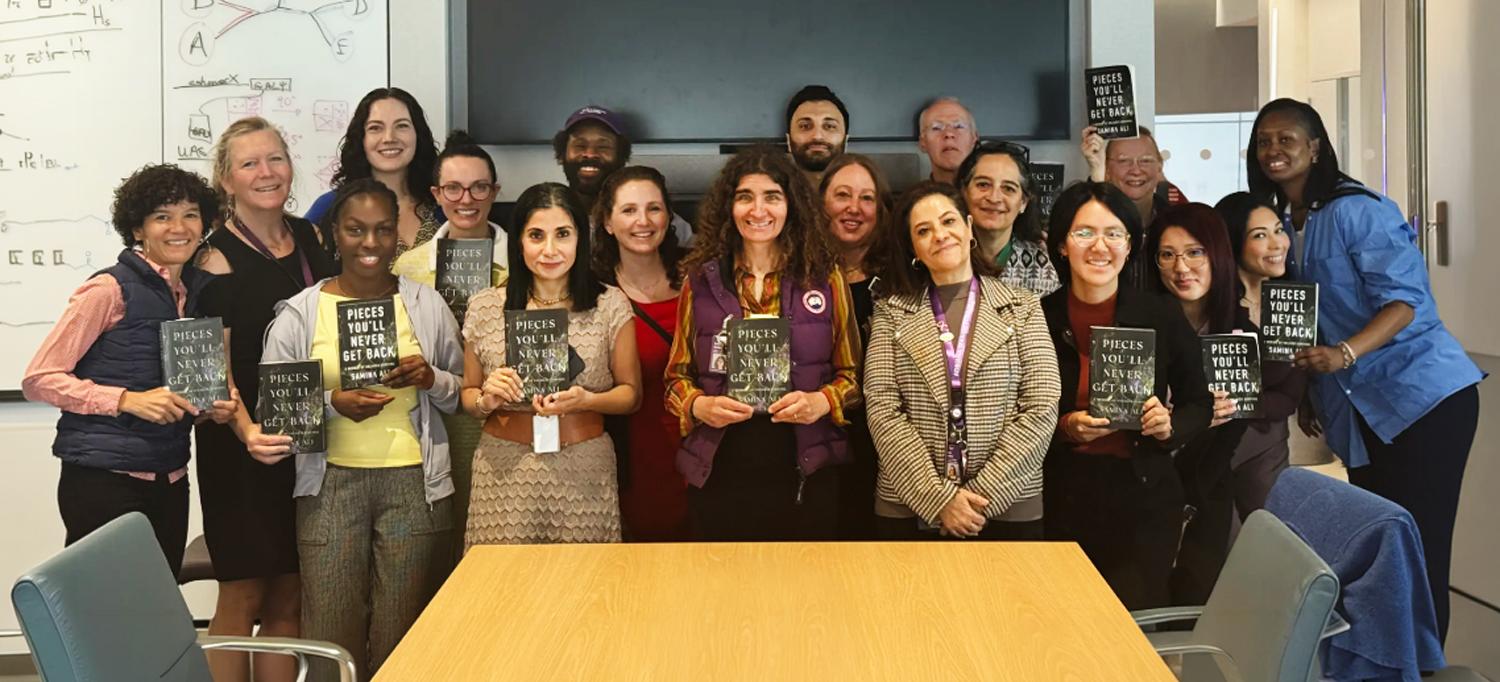
Through the Patient Experience Book Club, staff are able to better understand the people they care for and each other.
Credit: NYU Langone
Katherine Hochman, MD, MBA, director of the Division of Hospital Medicine at NYU Grossman School of Medicine, has long understood that patients have better outcomes when people who work within a health system are attuned to what the patient is experiencing and are also closely connected to each other as colleagues. From this belief she started a movement that would enhance patient experience through literature, one that is still growing more than a decade later.
“Patient experience is linked to the experience of the faculty and staff,” said Dr. Hochman. “We need to intentionally inject joy into the work in a way that is meaningful and sustainable.”
That’s why she created the Patient Experience Book Club, in which NYU Langone staff gather to discuss novels, memoirs, plays, and other works that highlight medical and social issues relevant to their patients. Literature, Dr. Hochman believes, provides a gateway for hospital workers to deepen their empathy and sense of community, which enhances how they connect with patients and ultimately deliver care.
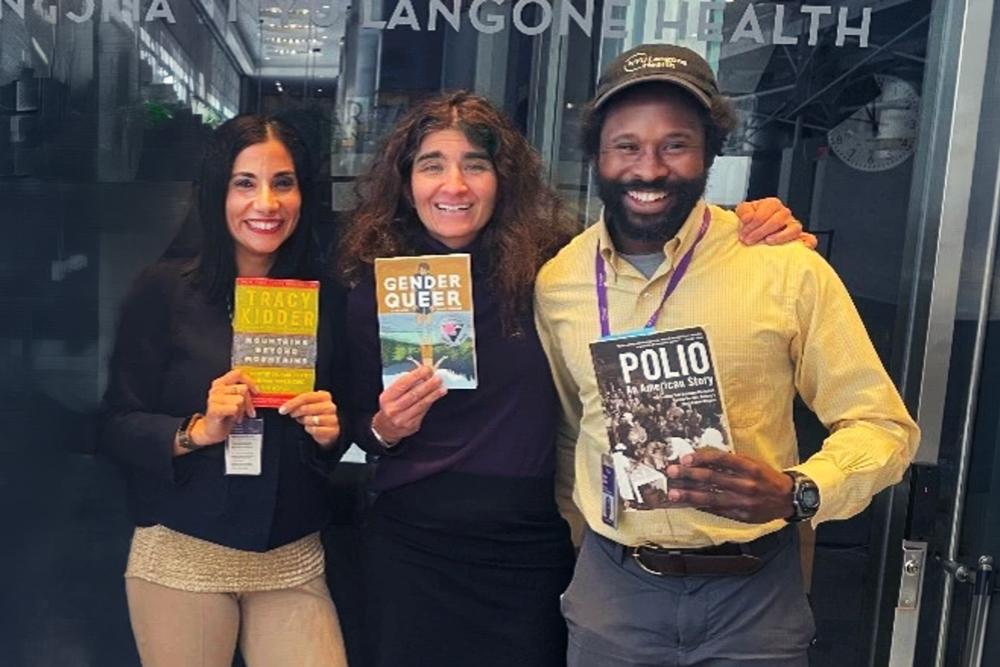
“We need to intentionally inject joy into the work in a way that is meaningful and sustainable,” says the book club’s creator, Dr. Katherine Hochman.
Credit: NYU Langone
About a dozen people attended the first session, in 2012. Today the club has more than 500 participants and draws visiting authors like Suleika Jaouad, whose memoir, Between Two Kingdoms, chronicles her years living with leukemia, and Reginald Dwayne Betts, who first turned to literature while incarcerated and later became an acclaimed poet and MacArthur fellow.
To achieve this level of engagement, Dr. Hochman has welcomed people like co-lead Dilshad Marolia, system director of hospitals regulatory and policy management, who brings a nonclinical perspective to the group. “While I don’t treat patients, I'm actively involved with them,” said Marolia, adding that reading a memoir about a patient recovering from stroke directly shaped how she thought about the administrative work she does overseeing NYU Langone’s stroke programs. “Having that humanistic aspect," she said, "informs the work in a way that dry data never could.”
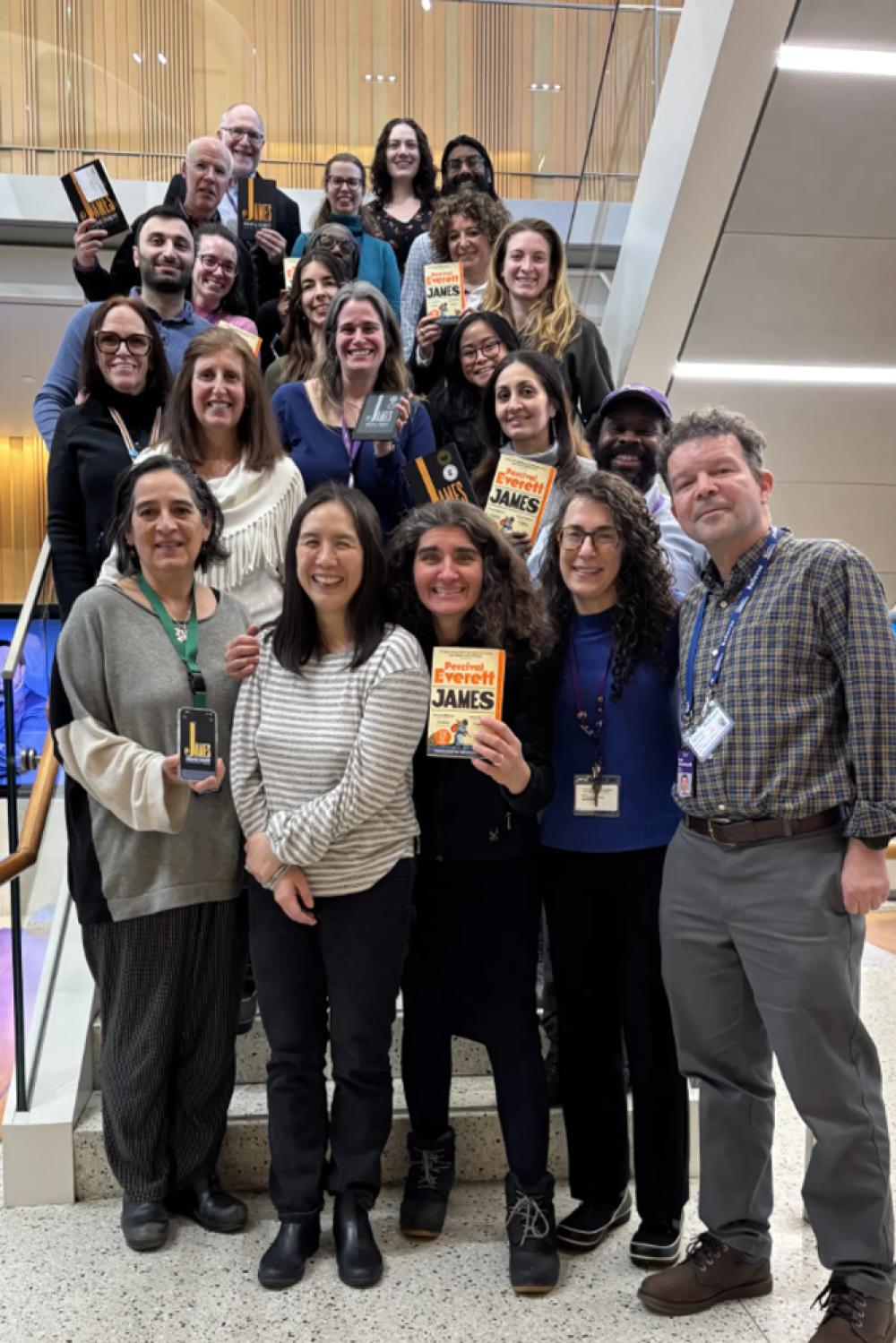
During book club, everyone introduces themselves by first name, coming together as equals.
Credit: NYU Langone
Through Dr. Hochman and Marolia’s partnership the Patient Experience Book Club has become a place where a social worker and a department head can disagree and both be right. Participants introduce themselves by first name, and everyone comes to the table as equals.
“It takes an ensemble of people with different backgrounds and strengths to run this hospital system,” said Dr. Hochman. “Having a cross-section in the same room creates a special chemistry you don’t see often in healthcare.” That cross-section extends well beyond the clinical floors. Roger Smith, a credentials manager in the Office of General Counsel, joined the club in December 2020 after a colleague, noting Smith’s large stack of books on his desk, nudged him to attend. He now leads book sessions for other teams across the organization and brings monthly discussions back to his own department.
“The Patient Experience Book Club affects how all of us support the mission of this organization,” said Smith. “When we read Salman Rushdie’s Knife, his account of recovering right here at NYU Langone, I led a session for 20 administrators and we never stopped talking. Personally, I didn’t pick up a memoir until joining the book club and now I find it so valuable to hear a story in someone's unique voice.”
In a recent survey of more than 100 club participants, nearly all said that belonging to the book club increases their professional well-being. And more than 97 percent said it inspires them to think about patient care differently.
Soon after reading Percival Everett’s James, a retelling of the Adventures of Huckleberry Finn from the perspective of the enslaved Jim, hospitalist Ravi K. Kesari, MD, met with a patient who’d been experiencing homelessness.
“He expressed gratitude that I listened, made eye contact, and showed empathy by placing my hand on his shoulder as he told his story,” said Dr. Kesari. “It was heartbreaking when he described his last medical experience as being treated like an animal. He said, ‘They don’t even touch you anymore.’
“James had deepened my understanding of how dehumanization directed at Black Americans was not incidental but intentional—historically embedded in economic and political systems that have relied on the denial of full humanity to sustain themselves,” said Dr. Kesari. “That context made this patient’s words land differently. Touch and eye contact carried weight precisely because such gestures have so often been withheld.”
Lauren McIntyre, an athletic training program manager, was especially moved by Blood Orange Night, Melissa Bond’s memoir about being given benzodiazepines for postpartum insomnia and left to unravel. “I suffered from postpartum mental health issues that went under the radar, just like the woman in the book,” she said. “The impact of advocating for our patients is now burned in my mind.”
That willingness to be changed clinically and personally shows up across units.
“I often think about the book Every Deep-Drawn Breath,” said intensivist Shari B. Brosnahan, MD. “Wes Ely writes about being excited to see a patient he helped survive the intensive care unit. Then he sees that the patient suffered horrible consequences of post-ICU syndrome—a newly described condition at the time.”
When she had a young patient who required a prolonged intubation, “I made sure to normalize the cognitive issues that can arise from being in the ICU,” she said. “I shared promising results about neurologic rehabs—even iPhone games—which have been known to improve some of the effects. Six months later, I received an email from the patient thanking me for giving that warning shot and for letting them know the brain might need to heal as well.”
Members have used the sessions to discuss caring for aging parents and their own illnesses and losses. When someone opens up, for that moment they hold the most important voice in the room.
“These conversations are fostered by the safety of the forum and facilitated by the literature, which invites people to share,” said Marolia.
Dr. Hochman and Marolia are finding ways for even more people, particularly support staff, to join the club. And three NYU Langone patients who wrote books will soon visit for pop-up sessions, letting staff members engage in intimate discussions with the very people they care for.
More than a decade after that first session, the book club has weathered hurricanes, a pandemic, and everything that comes with a large institution moving through time. Through it all, members have continued to let literature shape how they connect with patients and with each other. By questioning their assumptions, encountering perspectives far outside their own, and reading books they never would have chosen independently, they have moved beyond being just colleagues to form a true community of care.
Media Inquiries
Arielle Sklar
Phone: 646-960-2696
Arielle.Sklar@NYULangone.org