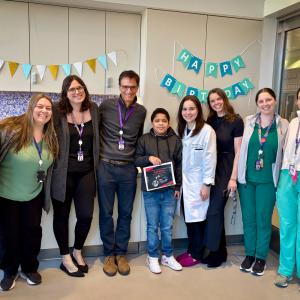
Eosinophilic Esophagitis, or EoE, a Chronic Inflammatory Disease That Can Make Swallowing & Eating Painful, Is Becoming Increasingly Recognized In Children.
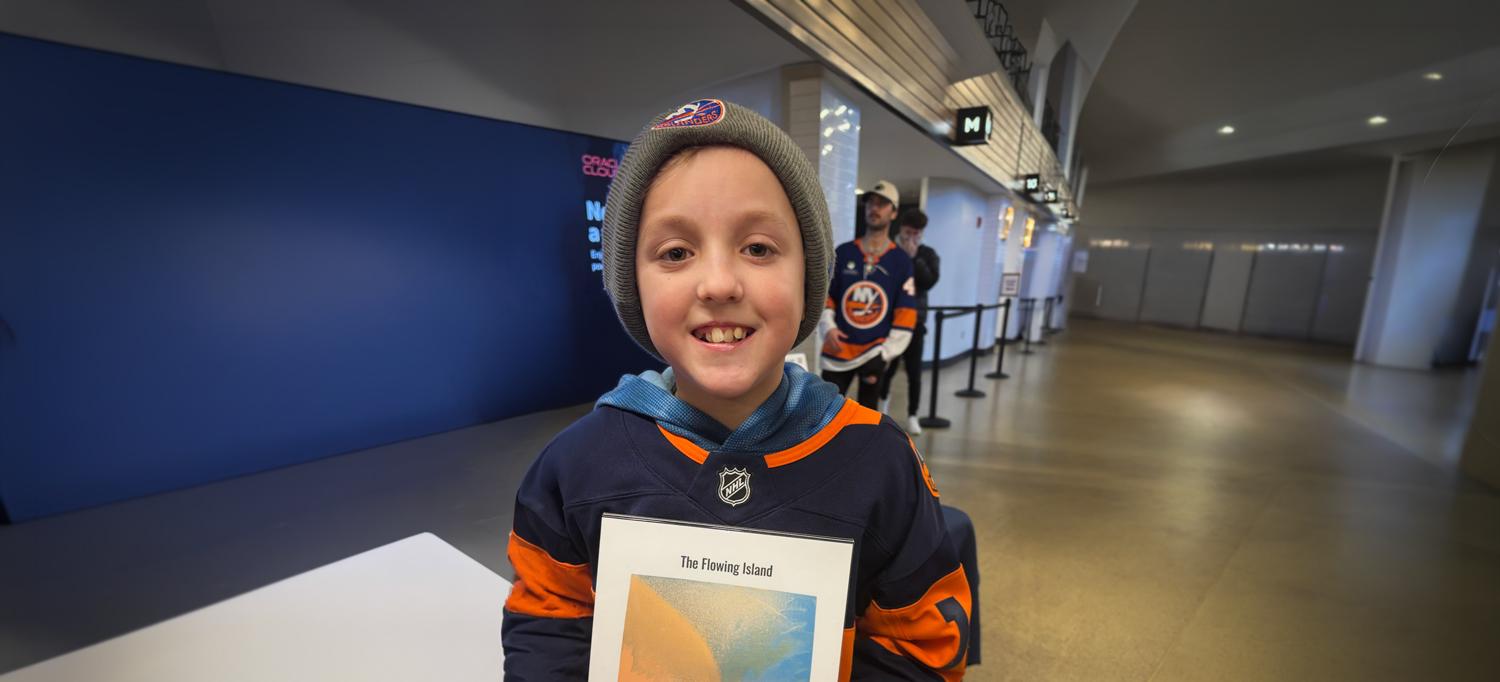
Art has become a creative outlet for Logan Fitzpatrick as he manages eosinophilic esophagitis.
Credit: Stephanie Fitzpatrick
Today, 11-year-old Logan Fitzpatrick of Malverne, New York, spends his time playing baseball, practicing tae kwon do, painting, and cheering on the Mets and the Islanders. But behind the scenes, he continues to manage eosinophilic esophagitis (EoE), a chronic allergic disease of the esophagus that can make swallowing and eating painful and difficult.
After years of searching for answers, Logan and his family found ongoing, specialized care through the Pediatric Gastroenterology Program at Hassenfeld Children’s Hospital at NYU Langone, where his condition is medically managed with treatment, monitoring, nutrition guidance, and behavioral health support. Logan is sharing his story in recognition of World EoE Day on May 22. He and his family want to raise awareness about the increasingly recognized pediatric condition and encourage other families to seek answers when symptoms persist.
Looking Beyond ‘Just a Stomach Bug’
As a young child, Logan frequently complained that his stomach hurt. Over time, his parents, Stephanie and Tim Fitzpatrick, also noticed him vomiting, clearing his throat, and having increasing difficulty with food.
“When Logan was a baby, nothing seemed obviously alarming at first,” said Stephanie. “He had trouble nursing, cried during feedings, and spit up often, but we just assumed he was colicky.”
As symptoms continued, the Fitzpatricks repeatedly brought Logan to the pediatrician, where they were often told he was likely dealing with recurring stomach bugs.
“For years, his chief complaint was ‘My stomach hurts,’” said Stephanie. “We were consistently told it was probably another stomach bug.”
Still looking for solutions, Logan’s parents sought out a pediatric gastroenterologist. At age 5, Logan underwent an endoscopy at a local hospital and was diagnosed with EoE—a disease they had never heard of before.
The family transferred Logan’s care to Hassenfeld Children's Hospital in 2021, seeking more specialized long-term management for the condition under the care of pediatric gastroenterologist Melanie K. Greifer, MD.
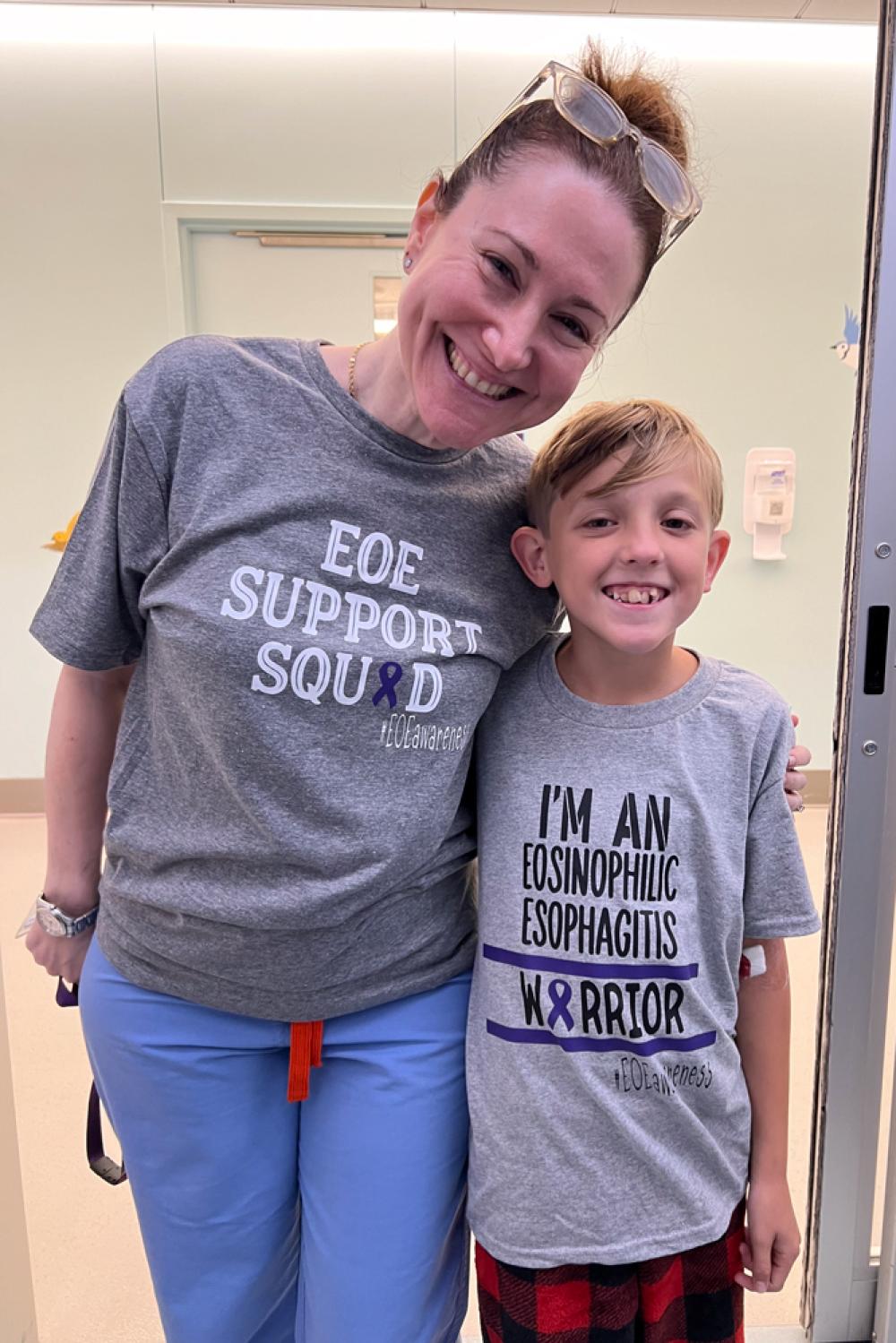
Melanie K. Greifer, MD, helps Logan manage EoE through specialized pediatric gastrointestinal care.
Credit: Stephanie Fitzpatrick
“EoE occurs when eosinophils, a type of white blood cell involved in allergic reactions, build up in the esophagus, causing chronic inflammation that can interfere with swallowing and eating,” said Dr. Greifer. “Often described as part food allergy and part swallowing disorder, EoE has symptoms that can vary by age and are frequently mistaken for more common childhood conditions.”
In younger children, symptoms can include feeding difficulties, vomiting, poor weight gain, and stomach pain. Older children may begin avoiding certain foods, eating very slowly, or needing large amounts of water to swallow comfortably. If left untreated, the inflammation can lead to narrowing and scarring of the esophagus, increasing the risk of food becoming stuck.
Once considered rare, EoE is now one of the most commonly diagnosed gastrointestinal diseases in children, with experts estimating the condition affects roughly 1 in 2,000 people. Researchers believe growing awareness, improved diagnosis, and increases in allergic disease are contributing to the rise in cases.
“Early diagnosis is critical in preventing long-term complications and helping children maintain a healthy relationship with food,” said Dr. Greifer.
Specialized Pediatric GI Care That Goes Beyond the Diagnosis
At Hassenfeld Children’s Hospital, Logan’s care includes ongoing monitoring, medication management, nutritional guidance, and behavioral health support through the Pediatric Gastroenterology Program. That whole-child approach is supported by the hospital’s Sala Institute for Child and Family Centered Care, where psychologists and certified child life specialists work alongside clinical teams to help children and families manage the anxiety, food-related fear, and stress that can come with chronic illness treatment.
Because symptoms do not always reflect the level of inflammation in the esophagus, children with EoE may undergo repeat upper endoscopies with biopsies to monitor how well treatment is working. During the procedure, physicians use a small camera to examine the esophagus and collect tiny tissue samples that can show whether inflammation is improving.
“Children with EoE aren’t just managing symptoms—many are also coping with anxiety around eating, medical procedures, and feeling different from their peers,” said Dr. Greifer. “Our goal is not only to control the disease but to help children regain confidence around food and feel like kids again.”
Today, Logan receives dupilumab, a biologic therapy given by injection that targets immune pathways driving inflammation in the esophagus. For Logan, treatment means a biweekly shot—one part of the ongoing routine his family has built around managing EoE.
For Stephanie, one of the most important lessons from the experience has been learning to advocate for her child.
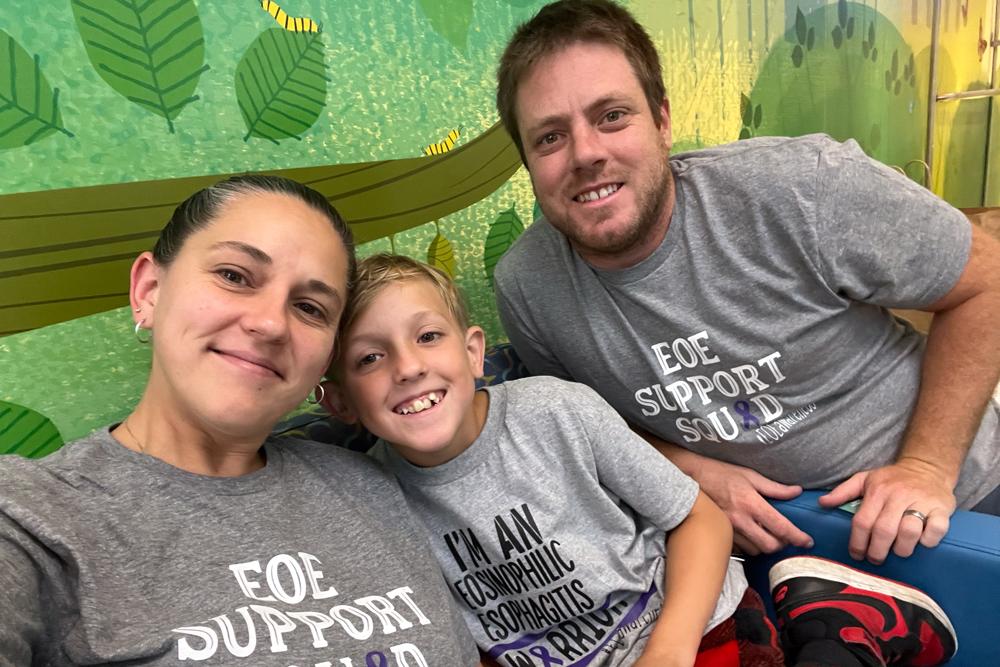
Logan with his parents, Stephanie and Tim, at Hassenfeld Children’s Hospital.
Credit: Stephanie Fitzpatrick
“Don’t be afraid to get a second opinion,” she said. “Do the research and find someone who will listen.”
Living with EoE also changed Logan’s relationship with food. As the family navigated dietary restrictions, Stephanie began baking gluten-, dairy-, and nut-free treats so Logan could still enjoy birthdays, holidays, and celebrations without feeling excluded. What began as a way to support her son eventually grew into a broader effort to help other families manage food allergies and eosinophilic disorders: She started a business called the Rare Treats Baking Company.
Finding Comfort Through Creativity and Community
With support from his care team and family, Logan has found ways to manage the emotional side of living with his chronic condition. Art has become one of his favorite outlets, especially on treatment days.
“After his biweekly dupilumab shot, he often asks for extra time to paint as a calming reward,” said Stephanie. Earlier this year, he sold some of his artwork at a local farm in Malverne.
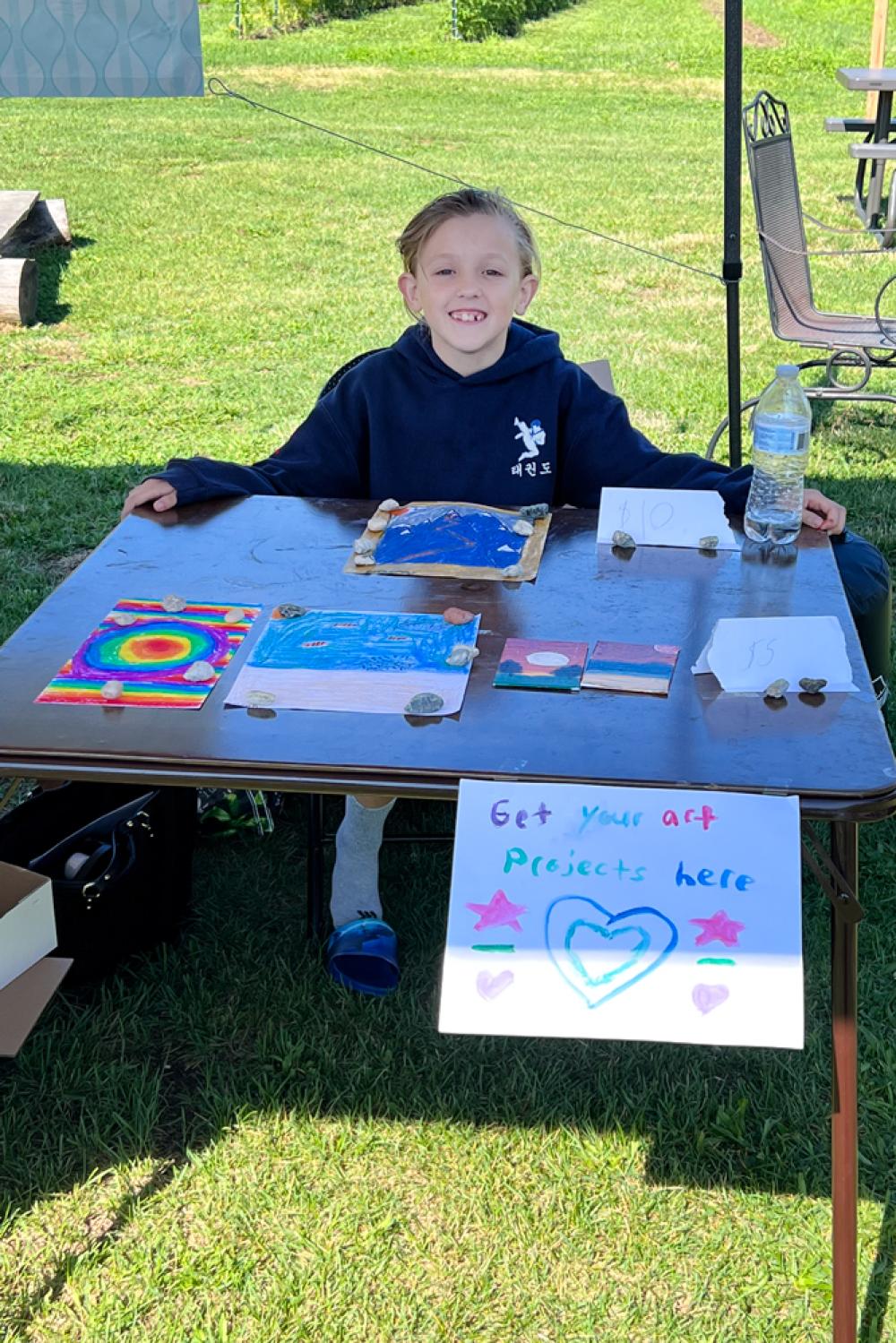
Art has become a source of comfort for Logan, who sold his paintings at a local farm in Malverne.
Credit: Stephanie Fitzpatrick
Outside of treatment, Logan and his family have become advocates for EoE awareness through the American Partnership for Eosinophilic Disorders (APFED), connecting with other families navigating the disease.
“Talking with other families changed everything for us,” said Stephanie. “There’s a comfort level that comes when you realize you’re not going through the hard days of EoE alone.”
Through APFED, Logan has connected with children across the country living with EoE. He shares tips for managing biweekly injections, including using lidocaine numbing cream beforehand and choosing a fun activity afterward.
Logan kicked off National Eosinophil Awareness Week (May 17 to 23) by hosting a lemonade stand that raised nearly $400 for APFED.
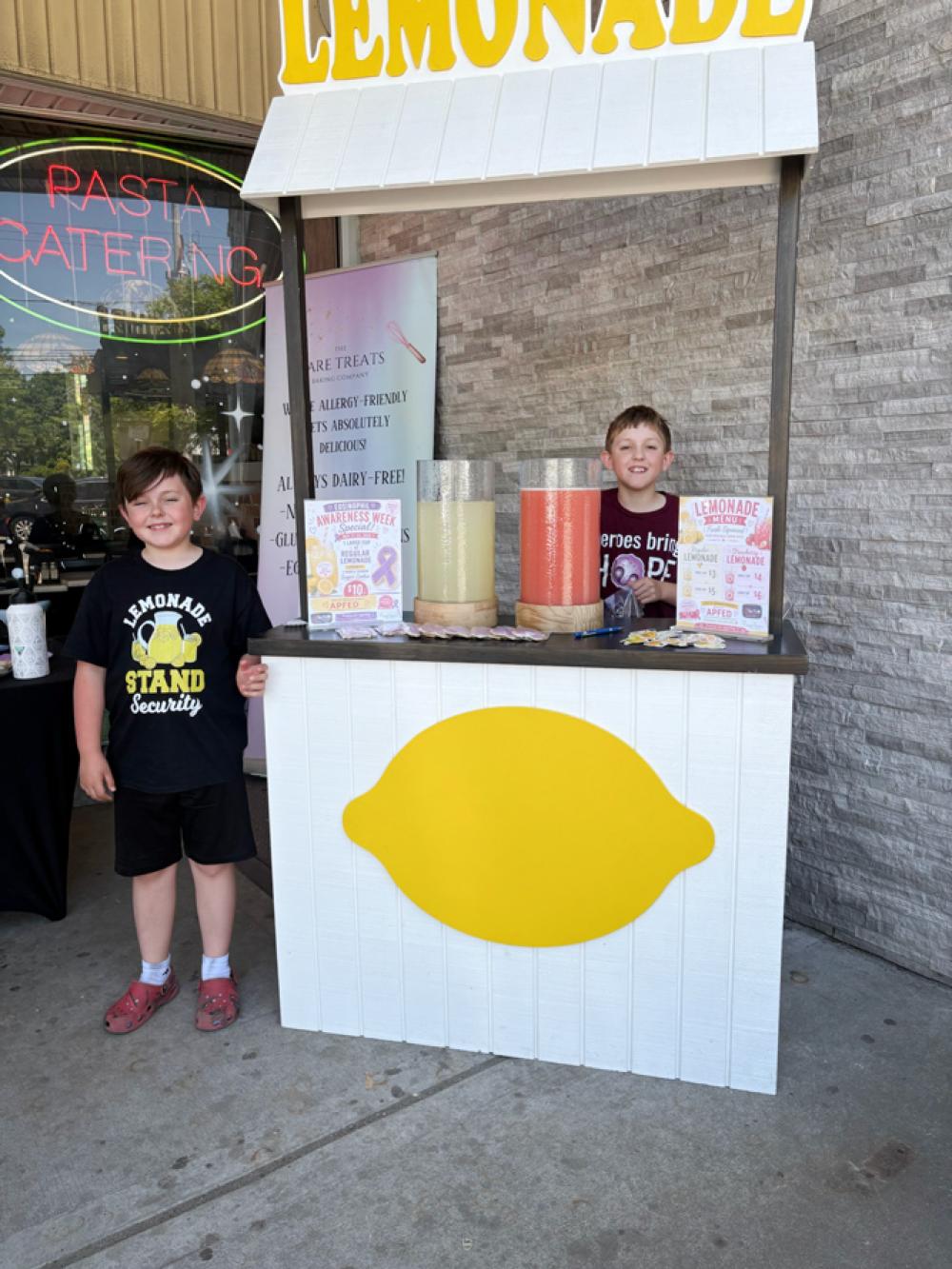
Logan at the lemonade stand he hosted to support EoE awareness.
Credit: Stephanie Fitzpatrick
Logan recently earned his black belt in tae kwon do and was invited into his dojo’s leadership program. He also pitched a complete-game victory for his baseball team in a 4–3 win.
“He’s taken this whole experience and turned it into something positive for other people,” said Dr. Greifer. “That’s what makes his story so special.”
Stephanie hopes that sharing Logan’s story will encourage other families to seek answers when symptoms persist.
“Food shouldn’t hurt,” she said. “Kids shouldn’t have to struggle in silence.”
Media Inquiries
Katie Ullman
Phone; 646-483-3984
Kathryn.Ullman@NYULangone.org