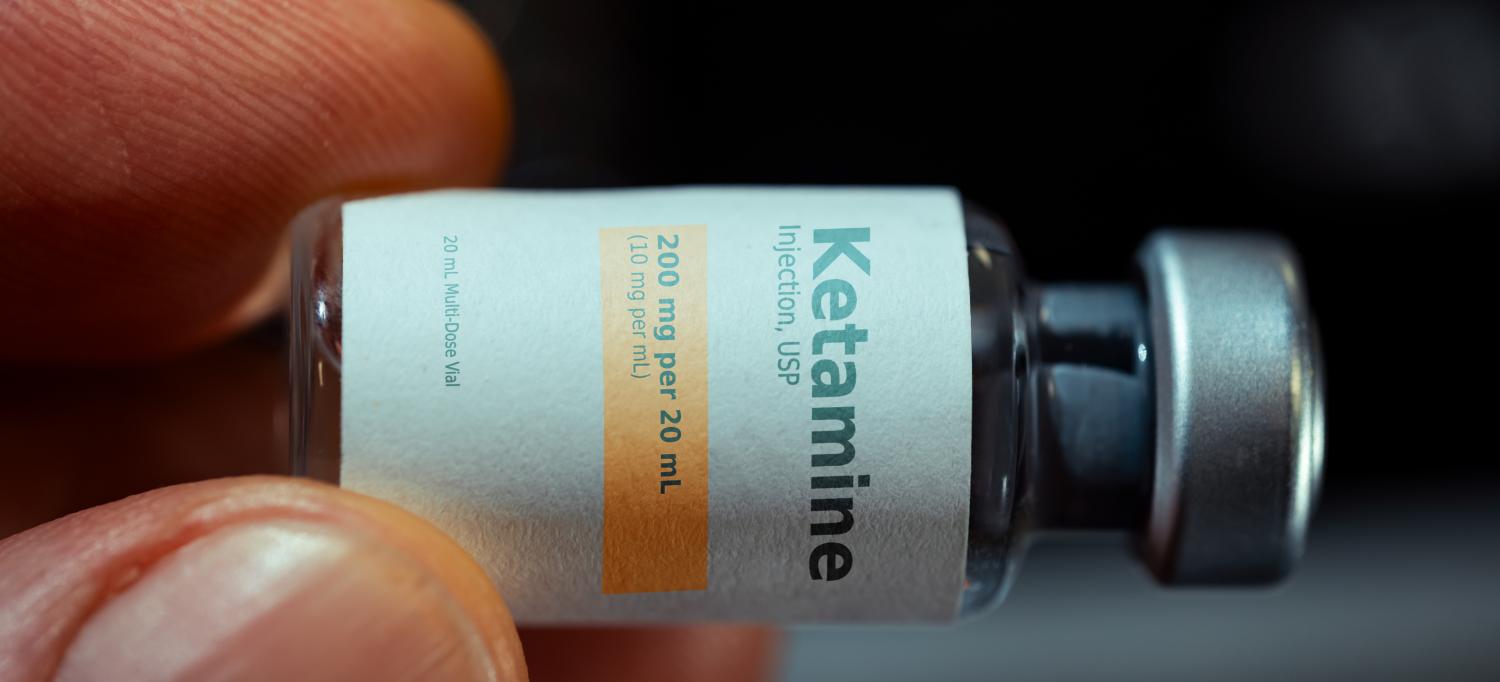
Jing Wang, MD, PhD, and other researchers at NYU Grossman School of Medicine will lead a seven-year, $19.67 million multicenter trial testing whether low-dose ketamine can improve pain relief and longer-term recovery after orthopedic trauma surgery.
Getty / D-Keine
For many patients, the pain from a serious orthopedic injury does not end when surgery is over. It can linger for months, complicating recovery, disrupting sleep and mood, and sometimes extending the need for pain medication. That challenge is at the center of a new study led by Jing Wang, MD, PhD, the Valentino D.B. Mazzia, MD, JD, Professor of Anesthesiology in the Department of Anesthesiology, Perioperative Care, and Pain Medicine; Philipp Leucht, MD, PhD, the Jyoti Menon Associate Professor of Orthopedic Surgery in the Department of Orthopedic Surgery; and Andrea B. Troxel, ScD, director of the Division of Biostatistics in the Department of Population Health, where she is a professor.
In a large, multicenter clinical trial, they will examine whether low-dose ketamine can improve pain control after surgery for serious orthopedic injuries. The seven-year study has been approved for $19.67 million in funding from the federal Patient-Centered Outcomes Research Institute (PCORI).
“Orthopedic trauma surgery can lead to pain that lasts for months after surgery and may affect recovery, mood, and opioid use,” said Dr. Wang, who is also director of the Interdisciplinary Pain Research Program and research director of the Center for the Study and Treatment of Pain. “This funding will support a complex clinical trial designed to answer real-world questions, with the potential to change how pain is managed after serious orthopedic trauma.”
The study—Ketamine for Pain After Orthopedic Surgery for Trauma (K-POST)—is expected to enroll 1,800 patients at multiple clinical sites who undergo surgery to repair broken bones. Participants will receive either standard pain treatment alone or standard treatment plus a low-dose ketamine infusion during and after surgery. Standard care can include opioids, nonsteroidal anti-inflammatory drugs, and topical pain treatments.
Researchers will follow patients beyond the immediate postoperative period, using the Brief Pain Inventory to track both the severity of pain and how much it interferes with daily life, while also looking at whether better pain control improves mental health and recovery.
PCORI was created by Congress in 2010 through the Affordable Care Act to address a persistent gap in medical research: Patients and clinicians often have several reasonable treatment options, but there is limited evidence showing which works best for whom in everyday care.
The K-POST trial is NYU Grossman School of Medicine’s first award through PCORI’s Phased Large Awards for Comparative Effectiveness Research (PLACER) program, which supports especially large, high-impact comparative-effectiveness trials.
“Ketamine has long been used as an anesthetic, but the field needs evidence not only about whether it can relieve pain, but how best to use it as part of clinical care,” said Andrew D. Rosenberg, MD, the Dorothy Reaves Spatz, MD, Chair of Anesthesiology, Perioperative Care, and Pain Medicine. “NYU Grossman’s leadership of this large, multicenter trial gives us an important opportunity to answer those questions and generate evidence that could improve pain management and recovery for patients after serious orthopedic injuries.”
In addition to Drs. Wang, Leucht, and Troxel, NYU Grossman faculty involved in the study include Perla Chebli, PhD, MPH; Lisa V. Doan, MD; Simona C. Kwon, DrPH; and Hyung G. Park, PhD.