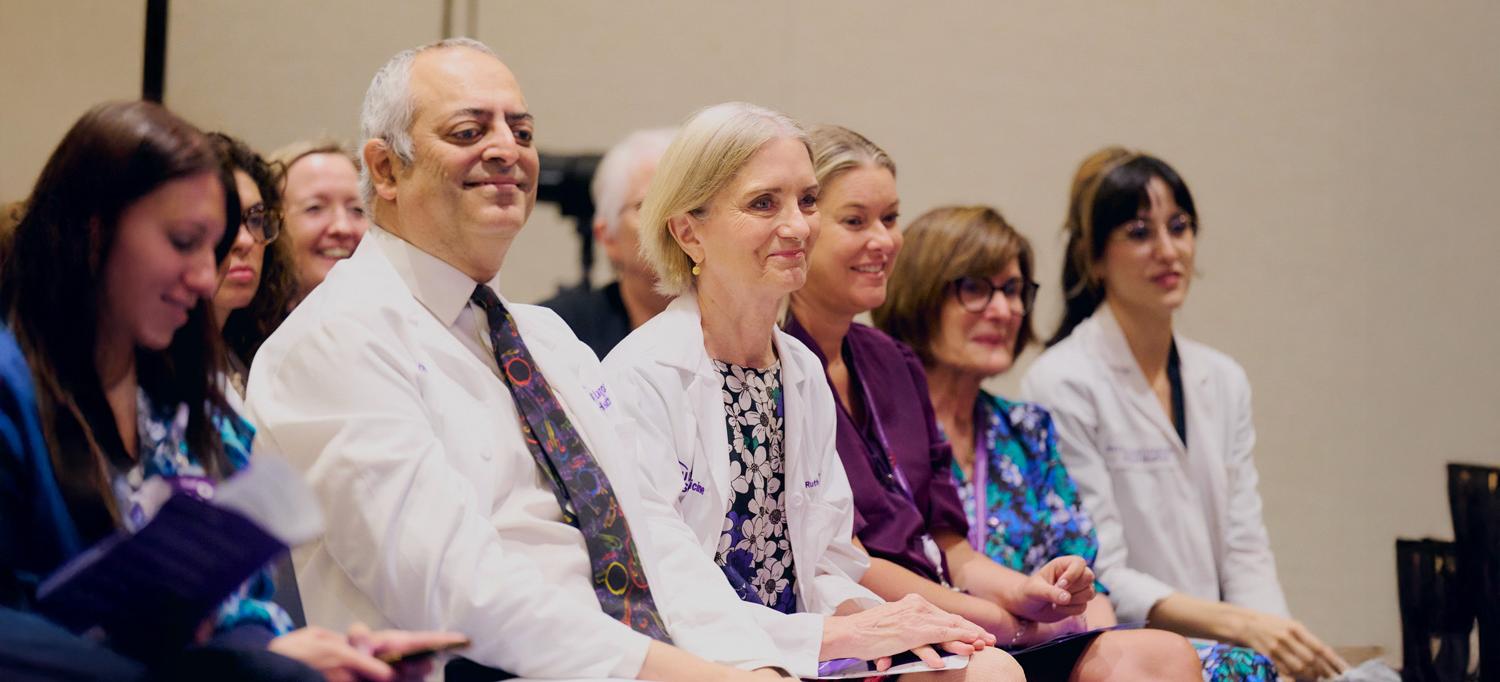
This year’s Consortium of Accelerated Medical Pathway Programs (CAMPP) brought together educators, deans, and policy experts to look at the evidence for and methods used to shorten the path to obtain a medical degree.
Credit: Joe Carrotta
A decade ago, the idea of graduating from medical school in three years was considered, at best, a niche experiment. On July 10, leaders from more than 40 medical schools gathered at NYU Grossman School of Medicine to demonstrate just how far that idea has come—and where it might be headed next.
Hosted by NYU Grossman School of Medicine, the annual conference of the Consortium of Accelerated Medical Pathway Programs (CAMPP) convened educators, deans, and policy experts from across the United States, Canada, and Australia to explore innovations in accelerated medical education and to affirm the growing consensus that shortening the path to becoming a doctor is no longer radical—it’s necessary.
“It’s so impressive to see how three-year MD programs have grown—and how we’ve developed as a group,” said Joan F. Cangiarella, MD, the consortium’s founder and chair, and NYU Langone Health’s senior associate dean for education, faculty, and academic affairs. “Not just in thinking about best practices in medical education, but in proving to the rest of the world that you can graduate medical school in three years.”
When Dr. Cangiarella launched CAMPP in 2015 with support from the Josiah Macy Jr. Foundation, only eight schools had committed to the accelerated model. Today, the consortium spans more than 40 institutions, many of which report that their accelerated students not only secure competitive residencies and carry less debt—typically saving between $70,000 and $100,000—but also excel academically.
That academic performance is backed by data: a landmark study by Dr. Cangiarella and her team at NYU Grossman School of Medicine, published last year in Academic Medicine, found that three-year graduates perform as well—or better—than their four-year peers across nearly every major metric of clinical skill and knowledge.
“Across the world, we’re seeing these new models take root,” Dr. Cangiarella said. “We’re even seeing a three-year MD program emerge in Australia, which shows how far this model has come.”
In the United States, a worsening shortage of physicians—especially in primary care—has fueled renewed interest in accelerated medical education. To help address that gap, in July 2019 NYU Langone Health opened its second medical school, NYU Grossman Long Island School of Medicine, which was the first in the country to offer a three-year MD program dedicated exclusively to training primary care physicians. But for members of the consortium, the urgency goes beyond workforce numbers. They see in this moment a broader opportunity to reimagine how doctors are trained in an era increasingly shaped by technology.
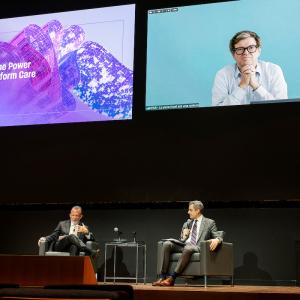
In a keynote that captured both the pace and potential of emerging technologies, Marc M. Triola, MD, associate dean for educational informatics at NYU Grossman School of Medicine and director of the Institute for Innovations in Medical Education, laid out how artificial intelligence (AI) is reshaping every facet of medicine—from diagnosis to medical school curricula.
“AI is no longer just a tool,” Dr. Triola said. “It’s a bidirectional colleague. It’s already more accurate than physicians at generating diagnoses in certain contexts. And our students are learning alongside it—whether we formally teach it or not.”
He outlined NYU Grossman School of Medicine’s emerging model of “precision medical education,” in which data from students’ clinical encounters, assessments, and digital learning platforms are continuously analyzed to personalize their educational paths. At NYU Langone, AI already recommends readings based on patients’ electronic health records and flags students who may benefit from early intervention.
“AI allows us to move from a reactive model—‘uh-oh, this student failed’—to a proactive and even preventive one,” Dr. Triola said. “Who’s likely to struggle? Who needs more coaching? That’s the promise.”
As the conference wound down with a rooftop reception, attendees reflected on the remarkable trajectory of the consortium—and the leadership that helped shape it.
“Your research, your data, your willingness to try new things—it’s made it possible for schools like ours to step forward with confidence,” said CAMPP member Shou-Ling Leong, MD, assistant dean for pathways innovation at Penn State College of Medicine, addressing Dr. Cangiarella. “Together, under your leadership, we’ve reimagined what medical education can be.”